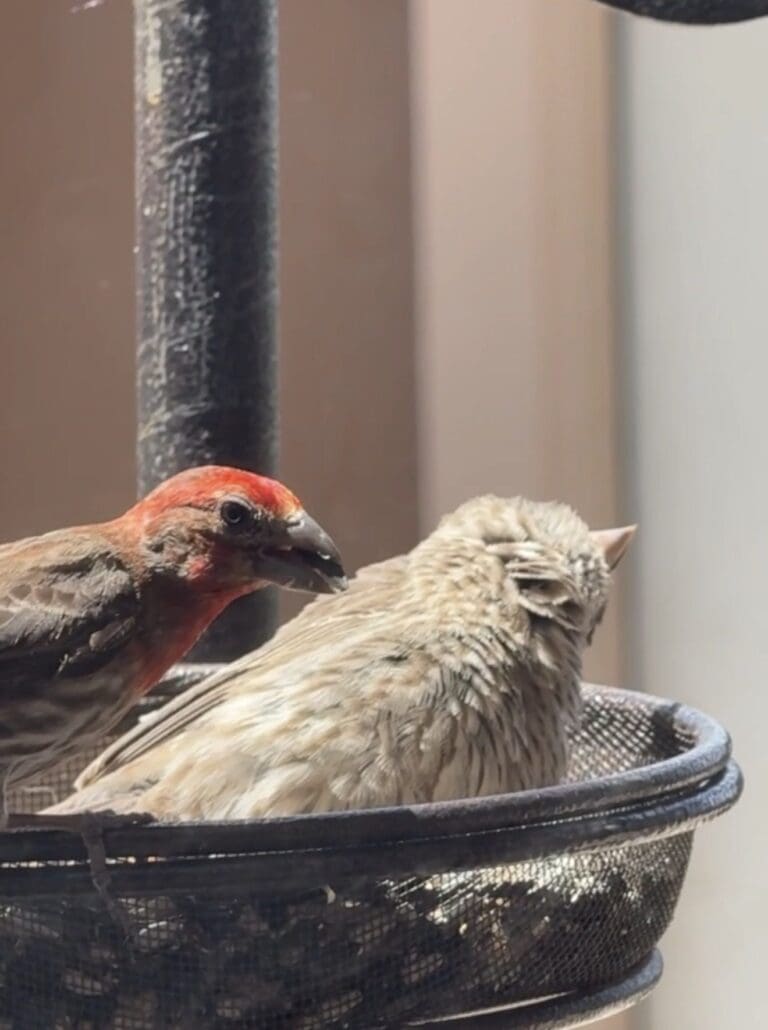
Winter Birds of the Texas Hill Country: Who Shows Up at the Feeder, November to March
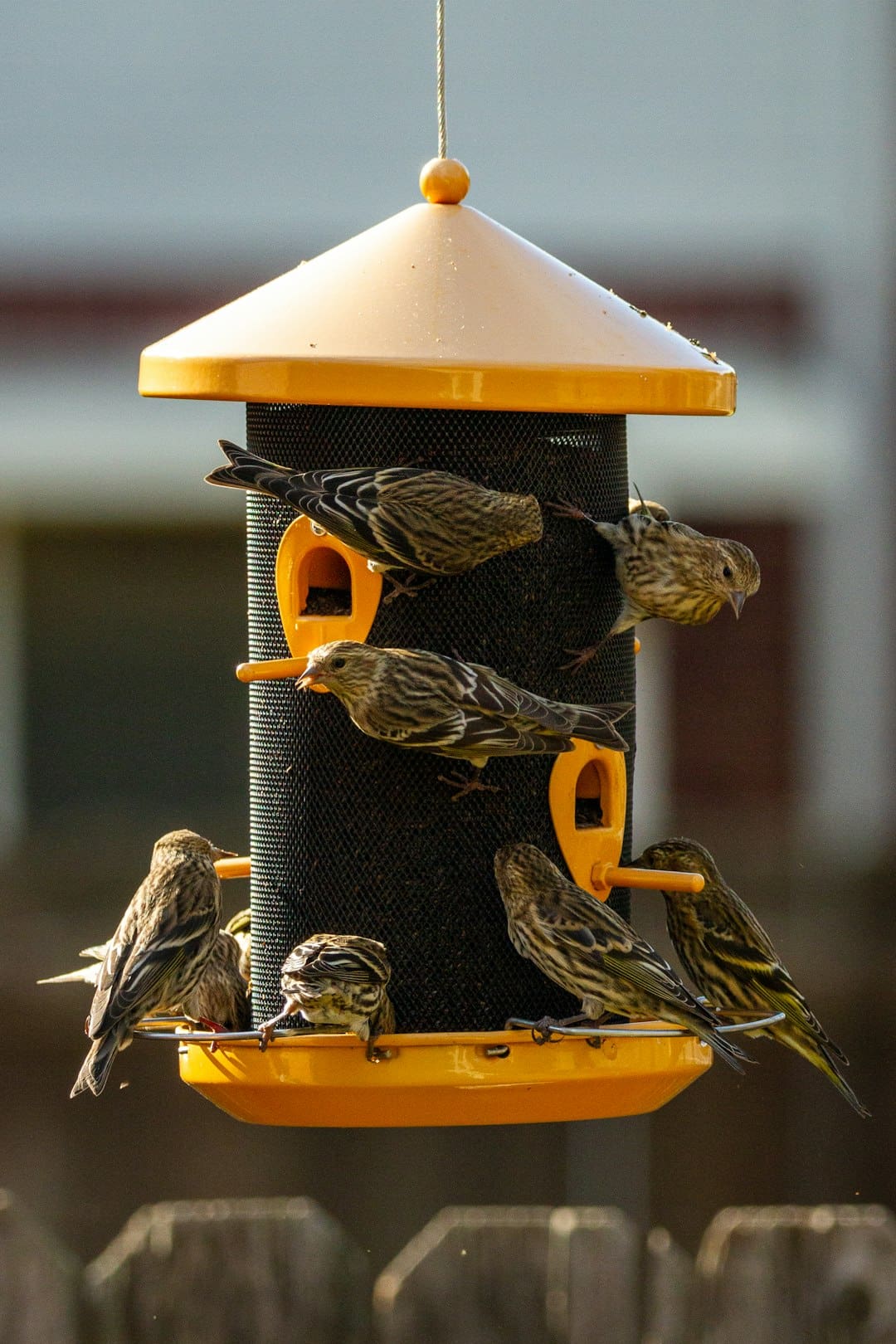
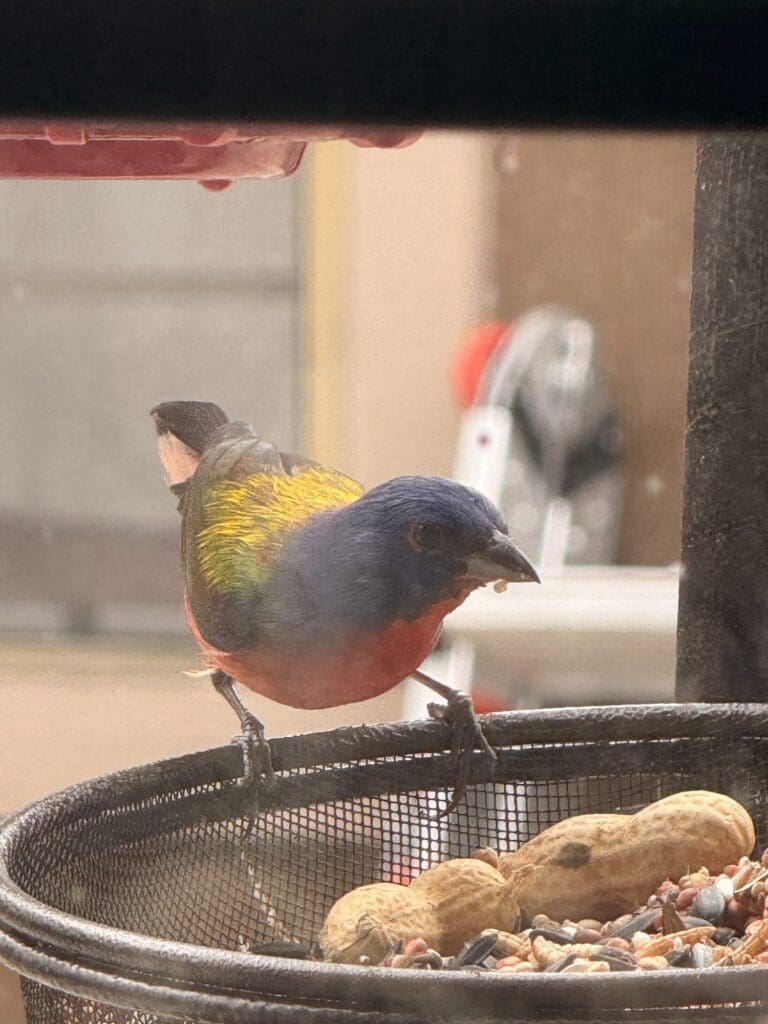
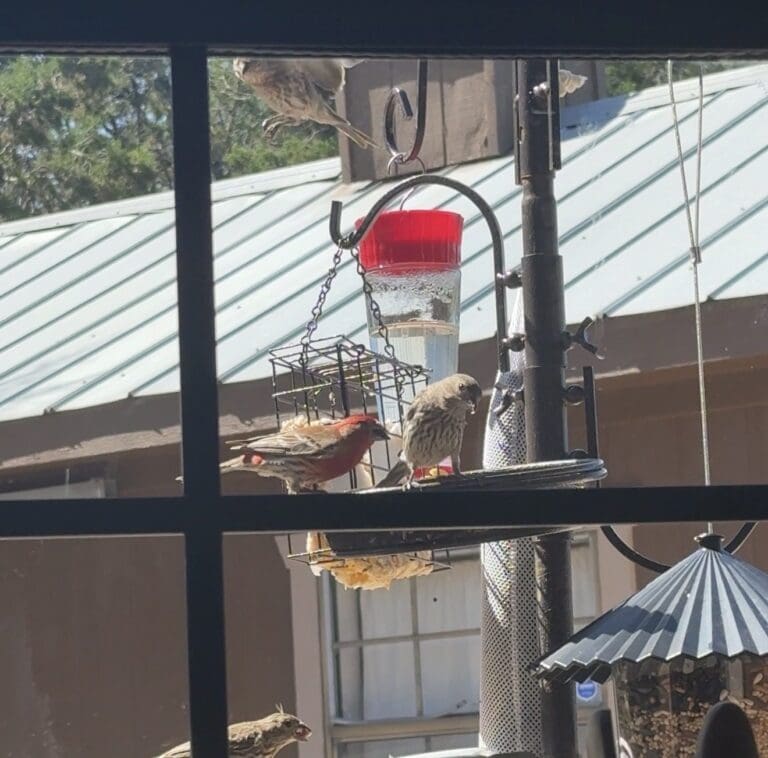
The painted buntings left in September. By the first real norther, which in the Hill Country usually means sometime in November, the feeder turns over to a different crowd: goldfinches in their dull winter coats, juncos picking through the spilled seed underneath, kinglets working the live oaks and, if the year is right, a mob of pine siskins draining the thistle sock in an afternoon.
The short answer: winter birds in the Texas Hill Country arrive on cold fronts from late October through November and stay until roughly March. The ones most likely to show up at a backyard feeder are the American goldfinch, dark-eyed junco, chipping sparrow, spotted towhee, ruby-crowned kinglet, yellow-rumped and orange-crowned warblers, yellow-bellied sapsucker and, in some years, pine siskins. Cedar waxwings and big flocks of American robins come for the berries, not the seed.
When do winter birds arrive in the Hill Country?
They ride in on the north wind. Travis Audubon’s monthly forecasts for Central Texas tie the arrivals to cold fronts rather than to a date: yellow-bellied sapsuckers start turning up in late October, and November brings the winter warblers (orange-crowned, yellow-rumped and pine), more sapsuckers and northern flickers. “During November north winds will bring in more winter Texans,” as the forecast put it.
So the useful rule is not a calendar date. Watch the weather. The morning after the first strong front is the morning to look out the window. Most of these birds hang on through February and start drifting north in March, which is about when the hummingbirds and buntings come back to take their places.
Where the winter birds come from
Pick a bird to see roughly where it breeds before it flies south to the Hill Country for the winter.
American goldfinch
Summers in: Across southern Canada and the northern United States, coast to coast.
In the Hill Country: roughly November to March, arriving on the cold fronts. Shows up in drab gray-brown winter plumage, not summer yellow. Goes for nyjer and sunflower.
Pine siskin
Summers in: Most of Canada and Alaska, plus the western mountains and northern edge of the US.
In the Hill Country: roughly November to March, arriving on the cold fronts. Irruptive: crowds of them some winters, none at all in others, depending on the seed crop up north.
Dark-eyed junco
Summers in: Boreal forest from Alaska to Newfoundland, south into the Rockies, the Pacific ranges and the Appalachians.
In the Hill Country: roughly November to March, arriving on the cold fronts. Feeds on the ground under the feeder. White outer tail feathers flash when it flies.
Ruby-crowned kinglet
Summers in: Spruce-fir forest across Alaska and Canada, northern New England and the western mountains.
In the Hill Country: roughly November to March, arriving on the cold fronts. Tiny and never still. Eats insects, so watch the suet in hard cold, not the seed.
Yellow-rumped warbler
Summers in: The northern conifer woods and mid-elevation conifer forests of the western mountains.
In the Hill Country: roughly November to March, arriving on the cold fronts. Look for the bright yellow patch just above the tail.
Orange-crowned warbler
Summers in: Alaska and across Canada, the Rocky Mountains and the Pacific Coast.
In the Hill Country: roughly November to March, arriving on the cold fronts. Plain olive-gray all over. The orange crown almost never shows.
Yellow-bellied sapsucker
Summers in: The forests of Canada and the northeastern United States.
In the Hill Country: roughly November to March, arriving on the cold fronts. Its summer and winter ranges barely overlap. Look for neat rows of small holes in tree bark.
Cedar waxwing
Summers in: Open woods in southern Canada, shifting year to year with the fruit supply.
In the Hill Country: roughly November to March, arriving on the cold fronts. Comes for juniper and yaupon berries and water, almost never for seed.
Spotted towhee
Summers in: Shrubby country across northwestern North America. Northern birds spread east onto the Plains in winter.
In the Hill Country: roughly November to March, arriving on the cold fronts. Scratches backwards through leaf litter with both feet. You hear it before you see it.
Breeding areas are simplified from Cornell Lab of Ornithology, Audubon and published species accounts. Real ranges have softer edges than any map.
The winter visitors to watch for
American goldfinch
If you know goldfinches as the lemon-yellow birds from a Midwestern summer, the Texas winter version will throw you. Travis Audubon calls them “regular winter residents” of Central Texas, and here they look gray-brown, with black-and-white wings. The males don’t go fully gold until they’re about to leave in spring. Cornell’s field marks for a winter bird: a cone-shaped bill, a notched tail, wing bars and no streaking on the chest.
They want nyjer (sold as thistle) and sunflower, and they arrive in groups. A hanging thistle feeder is the easiest way to get them. Don’t confuse them with the lesser goldfinch, the small resident with the green or black back and the yellow belly. Oddly, the TPWD checklist for the Kerr Wildlife Management Area lists the lesser goldfinch as common spring through fall and only rare in winter, so the two species mostly trade places at the feeder.
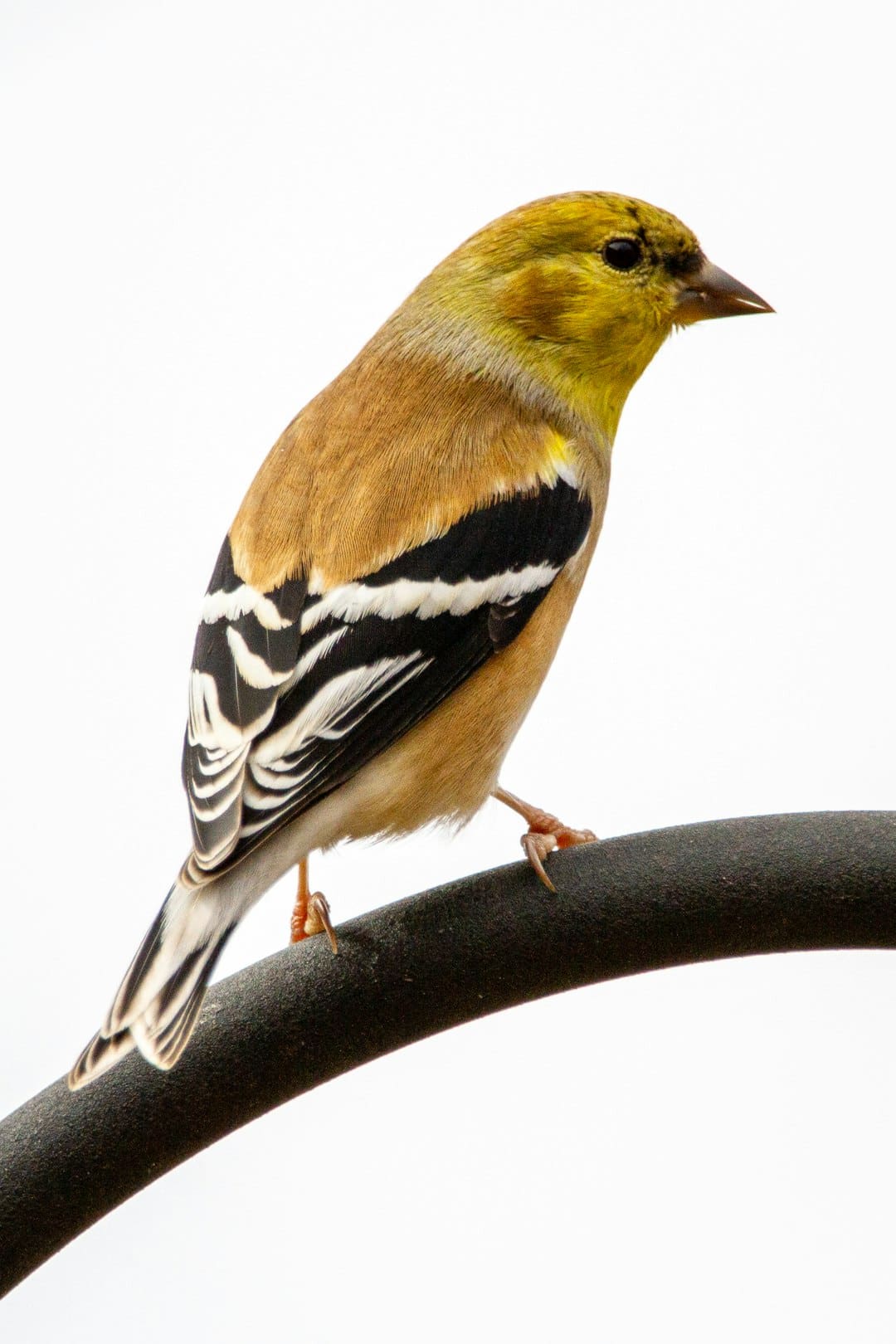
Pine siskin (some years)
Siskins are streaky brown finches with a thin, pointed bill and a flash of yellow in the wing. They’re irruptive, which means they only come south in big numbers when the seed crop fails up north. Last winter (2025–26) was one of those years. Cornell’s Lab of Ornithology reported siskins had reached Texas by December 2025. In a good-cone year up north you may not see a single one.
When they do come, they come in a crowd and they eat like it. They share the thistle and sunflower with the goldfinches, and they’re the main reason to keep your feeders clean.
Dark-eyed junco
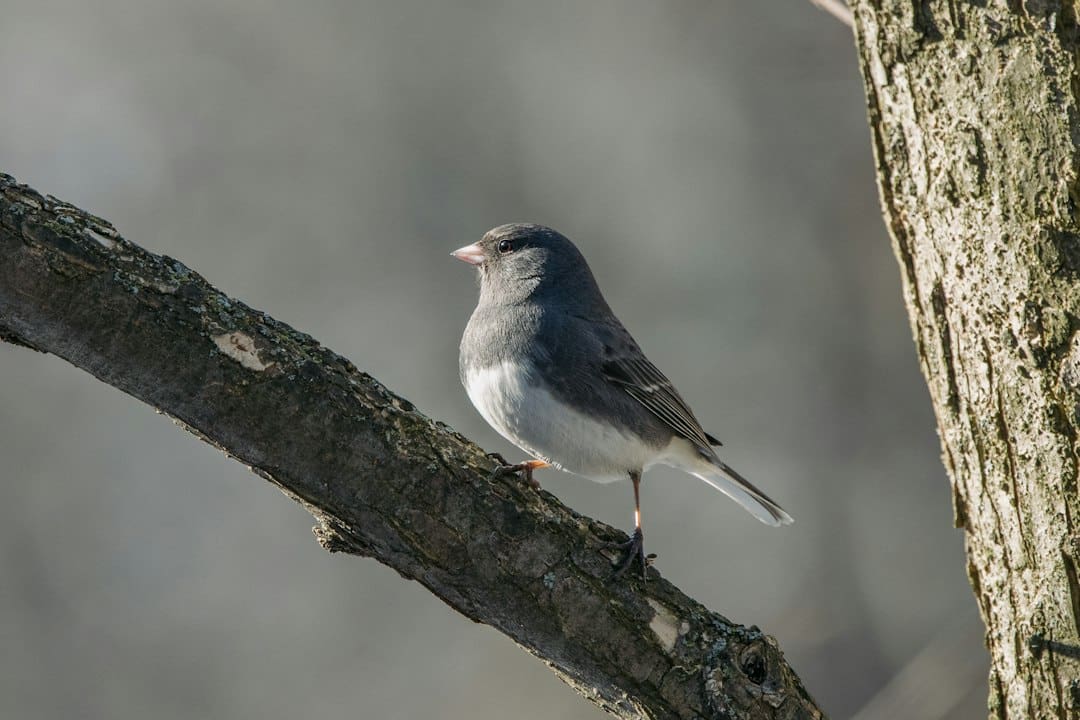
Cornell calls juncos the “snowbirds” of the middle latitudes: they breed in the mountains and up in Canada and spread south for the winter. Look for a neat gray (sometimes brown-hooded) sparrow-sized bird with a pale pink bill, feeding on the ground under the feeder rather than on it. When one flushes, the white outer tail feathers flash on either side. Scatter a little seed or millet on the ground and they’ll find it.
Chipping sparrows, spotted towhees and the brush crowd
Most of the little brown birds hopping around under a Hill Country feeder in January are chipping sparrows, which the Kerr WMA checklist rates common in winter. With them you’ll get the occasional spotted towhee: black hood and back with white spots, rusty sides, red eye. You usually hear one before you see it. Towhees feed with what Cornell describes as a “two-footed, backwards-scratching hop,” kicking the leaf litter like a chicken. That rustle in the brush pile is a towhee more often than an armadillo.
Ruby-crowned kinglet
This one is tiny, olive-green and never sits still, with a white eye-ring and a constant nervous wing-flick. The red crown is usually hidden. Kinglets eat insects, so they mostly ignore the seed. Travis Audubon notes they will come to a suet feeder in very cold weather, which is your best shot at a close look.
Yellow-rumped and orange-crowned warblers
These are the winter warblers. They’re drab compared with the spring migrants, and they’re easy to mistake for sparrows at a glance. The yellow-rumped gives itself away with a bright yellow patch right above the tail. The orange-crowned is plain olive-gray all over (the orange crown is almost never visible). Both work through trees and shrubs for insects and will visit suet.
Yellow-bellied sapsucker and northern flicker
These are the two woodpeckers that only show up for winter. If you find neat horizontal rows of small holes in a tree trunk, that’s sapsucker work. They drill wells and come back to drink the sap. Flickers are bigger and brown, with a spotted belly and a white rump that flashes when they fly. You’ll often see them on the ground eating ants. Both join the year-round golden-fronted and ladder-backed woodpeckers, and both will take suet.
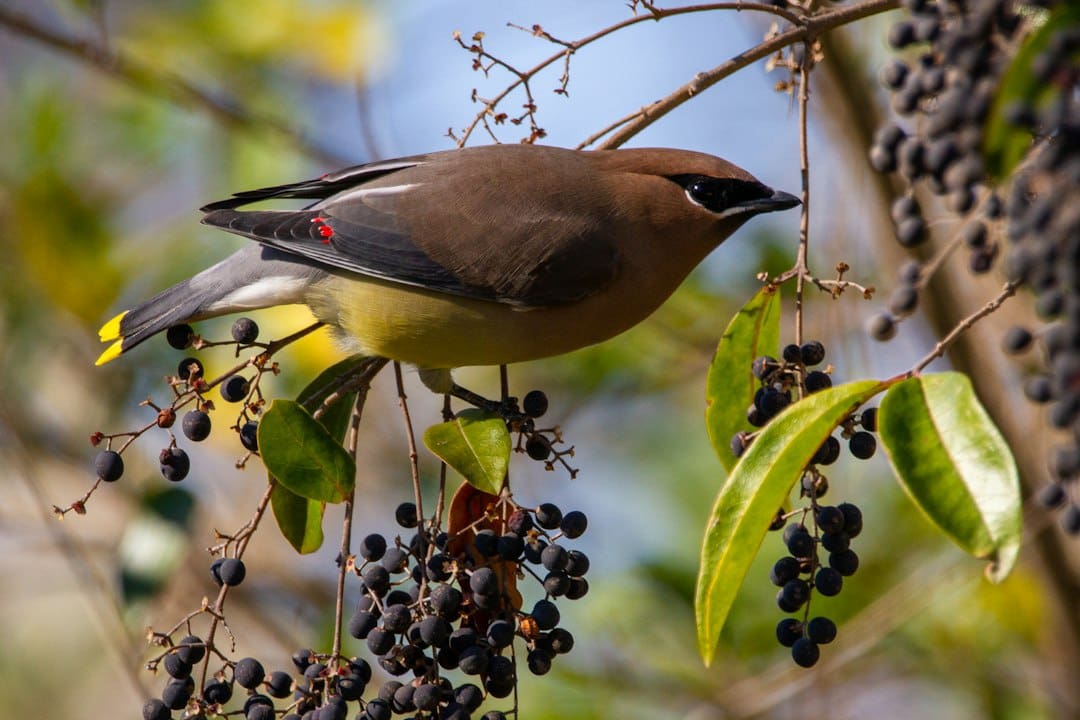
Cedar waxwings and American robins (the berry eaters)
Waxwings almost never come to a seed feeder, but anyone who lives among Ashe juniper will see them. They travel in tight, high-pitched flocks and strip berries: cedar (juniper) berries, yaupon, mistletoe, hawthorn and pyracantha, according to UT Austin’s campus biodiversity team. Robins do the same thing in winter. On the Kerr WMA checklist, the American robin is common in spring and fall, rare in summer and abundant in winter. The robins you see in December aren’t early spring birds. They’re the winter flock.
The way to get both close is water. A shallow birdbath that you rinse and refill every day or two brings in flocks that would otherwise just fly over.
The year-round regulars you’ll still see
Winter adds birds to the yard without taking many away. The northern cardinal, Carolina chickadee, Carolina wren, Bewick’s wren, house finch, eastern bluebird and the golden-fronted and ladder-backed woodpeckers all stay put. So does the eastern phoebe, which you’ll find bobbing its tail on the fence line.
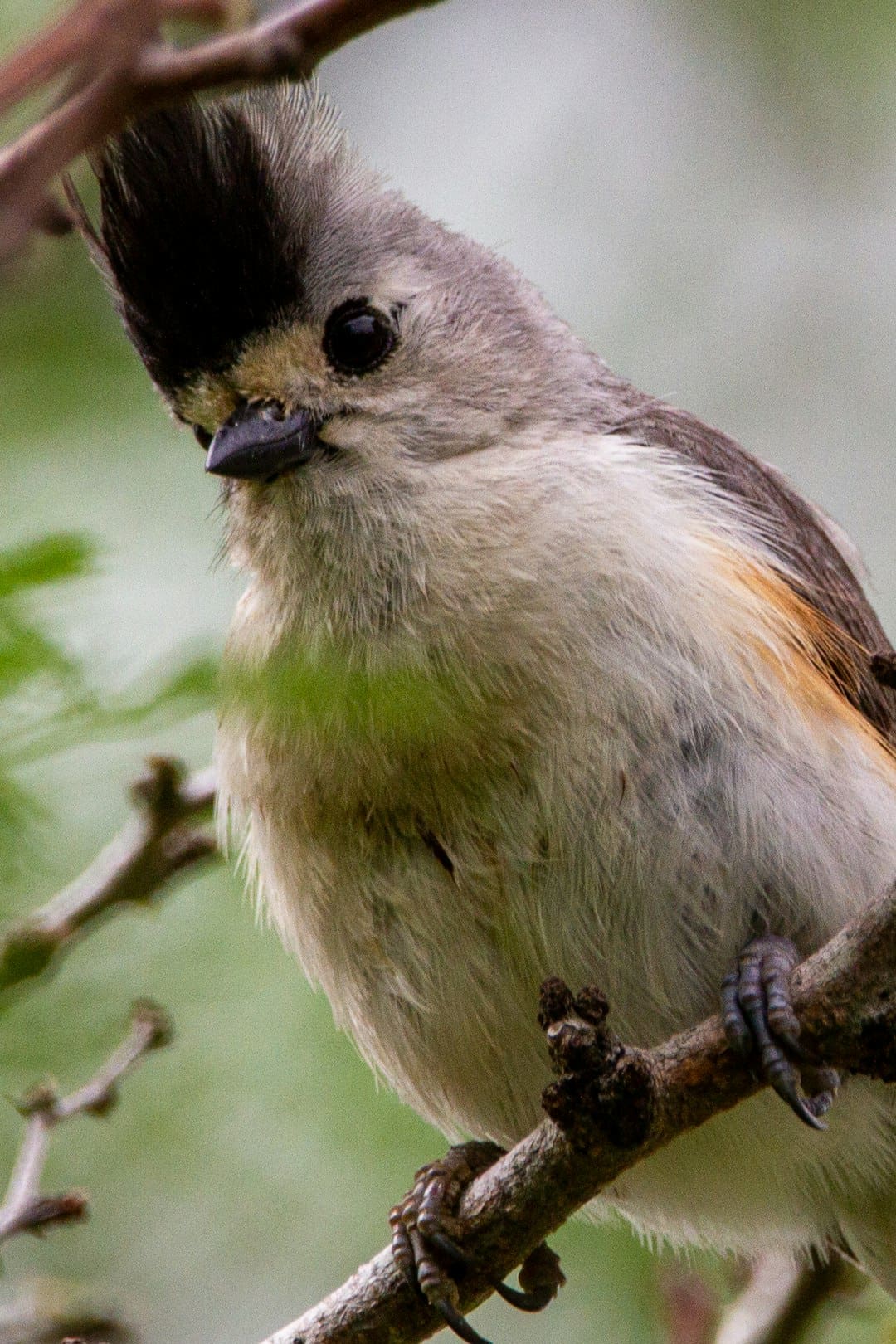
The one to know is the black-crested titmouse. It’s a small gray bird with a black crest and rusty flanks, and it’s ours. The Texas Breeding Bird Atlas says it breeds primarily on the Edwards Plateau, reaches only into extreme southwest Oklahoma and northeast Mexico, and is a year-round resident wherever it lives. If someone from out of state tells you they saw a tufted titmouse in your yard, it was probably this one.
What to feed winter birds in the Hill Country
Put out three foods at three heights and you’ll cover nearly everyone on this list:
- Hanging: nyjer and black-oil sunflower. This is for goldfinches, siskins, house finches, chickadees and the titmouse.
- On the ground: a little millet or mixed seed. This is for juncos, chipping sparrows and towhees, which would rather eat off the ground than off a perch.
- Caged: suet. This is for the kinglets, warblers, sapsuckers and woodpeckers. Winter is when regular suet finally makes sense again. The no-melt dough from my summer feeder guide works too.
- Water. A shallow bath, refreshed every day or two, is what pulls in the waxwings and robins.
TPWD’s advice is to start feeding when natural food gets scarce and to keep it up all winter, because birds come to depend on it. Put feeders out of cat range, with a baffle on the pole if squirrels are a problem.
Keep the feeders clean (finch flocks spread disease)
Winter flocks are where feeder hygiene stops being optional. When dozens of finches crowd one feeder, they pass illness between them. Cornell’s Lab of Ornithology recommends cleaning seed feeders about once every two weeks, more often during heavy use or wet weather, using no more than one part bleach to nine parts water. Rinse well and let everything dry before refilling. Cornell also says to rake up the spilled seed and hulls under the feeder, which is exactly where the juncos and sparrows are eating.
Count them: FeederWatch and the Christmas Bird Count
If you’re going to stare out the window all winter anyway, the data can be useful to someone. Project FeederWatch, run by the Cornell Lab and Birds Canada, started its season on November 1, and you can still join. You count the birds at your own feeders on days you choose. The Audubon Christmas Bird Count runs from December 14 to January 5 every year. It’s free, and if your house falls inside a count circle, you can do a feeder count from your kitchen without going out on the trail.
Both are easier with a feeder you can see from where you already sit. Here’s how to set up a bird sanctuary outside your window.
Winter birds in the Texas Hill Country: FAQ
What birds come to Texas Hill Country feeders in winter?
The most likely winter visitors are the American goldfinch, dark-eyed junco, chipping sparrow, spotted towhee, ruby-crowned kinglet, yellow-rumped and orange-crowned warblers, yellow-bellied sapsucker and northern flicker, plus pine siskins in irruption years. They join the year-round cardinals, chickadees, wrens, house finches and black-crested titmice.
When do goldfinches come to Texas?
American goldfinches are winter residents in Central Texas. They arrive with the cold fronts in late fall, stay through the winter and head north in spring. In Texas you’ll mostly see them in dull gray-brown winter plumage, not summer yellow.
Why are there so many robins in Texas in winter?
American robins winter in Texas in big flocks that feed on berries like juniper and yaupon. The TPWD checklist for the Kerr Wildlife Management Area rates the robin abundant in winter and rare in summer, so the December robins are winter visitors, not an early spring.
What should I feed birds in winter in Texas?
Black-oil sunflower and nyjer in hanging feeders, a little millet or mixed seed on the ground for juncos and sparrows, suet for kinglets, warblers and woodpeckers, and fresh water in a shallow bath.
How often should I clean bird feeders in winter?
Cornell’s Lab of Ornithology recommends about once every two weeks, and more often when flocks are heavy or the weather is wet. Use no more than one part bleach to nine parts water, rinse, dry, and rake up the seed hulls under the feeder.
The painted buntings will be back in spring. Until then the feeder belongs to the plain little birds that came down from the north, and they get more interesting the longer you watch them.
Sources: Travis Audubon November Bird Forecast; Travis Audubon on goldfinches and siskins; TPWD Birds of Kerr Wildlife Management Area checklist; Texas Breeding Bird Atlas; Cornell Lab: how to clean your bird feeder; Project FeederWatch; Audubon Christmas Bird Count.