Bewick’s Wren: The Tail-Flicking Singer of the Hill Country Brush
It’s small, it’s brown, and it will out-sing every flashy bird in your yard. The Bewick’s Wren is a personality in feathers.
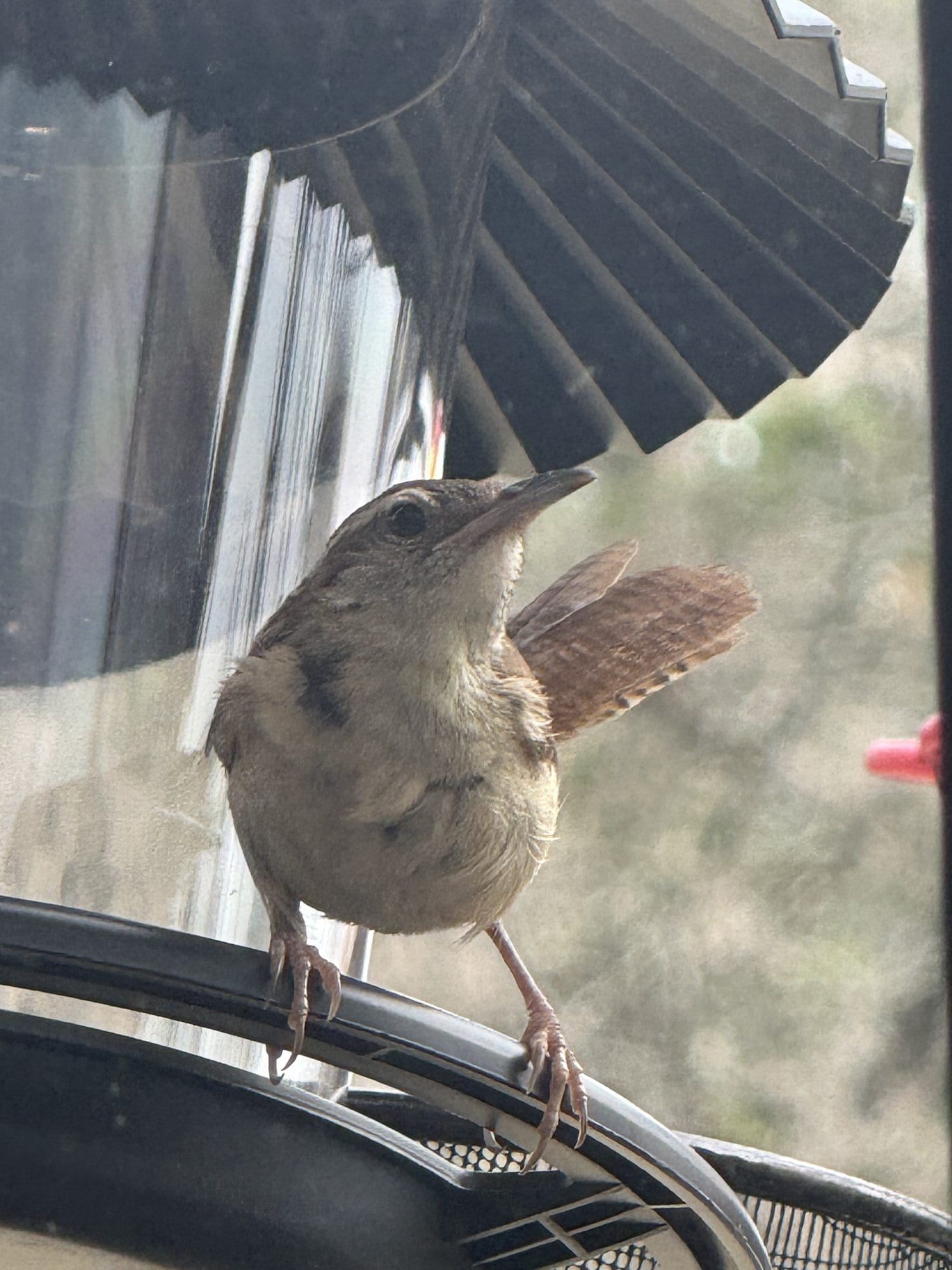
Pronounced “Buick” — like the car — the Bewick’s Wren is one of the great little characters of the Hill Country. Warm brown above and pale below, with a crisp white eyebrow and a long tail it flicks and fans from side to side like a tiny conductor’s baton, it’s endlessly busy in brush piles, woodpiles, and shrubby corners.
What it lacks in color it more than makes up for in voice. For such a small bird, the song is loud, musical, and astonishingly varied — a young male actually learns and invents his own repertoire of tunes.
The quick facts
When you’ll see it in the Hill Country
Bewick’s Wrens are year-round Hill Country residents. They’re singing on warm winter mornings and busiest of all in spring as they set up territories and nest.
Where the Bewick’s Wren comes from
The Bewick’s Wren is a bird of the western and south-central U.S. and Mexico, and central Texas is squarely in its stronghold. Here they’re common and resident, sticking to the same brushy territories all year.
There’s a quiet conservation note in its story: the population that once lived in the eastern U.S. has largely vanished, likely pushed out as the aggressive House Wren expanded and habitat changed. Our western birds, thankfully, are still going strong — another reason to value the brushy edges of a Texas yard.
What it eats
Bewick’s Wrens are insect hunters, gleaning beetles, bugs, caterpillars and spiders from bark, branches, and leaf litter. They’re acrobatic foragers, probing crevices the way a tiny nuthatch might.
Because they’re insectivores, they’re not seed-feeder regulars — but they’ll happily take a few high-value extras (below).
How to bring it to your yard
You attract a Bewick’s Wren less with a feeder and more with good, messy habitat — plus a couple of treats.
🪶 Feeder field guide
Offer suet, mealworms, or peanut hearts rather than seed. These protein-rich foods are what an insect-eater actually wants in your yard.
Leave a brush pile or two and keep some native shrubs — wrens forage and shelter in tangled cover. They’re cavity nesters, so a small wren box (or even a quirky nook like a hanging planter or an old boot) can win you a nesting pair.
Resist the urge to tidy every corner. A woodpile, a leaf-littered bed, and an unpruned shrub are five-star wren habitat. The messier edges of your yard are exactly where this big voice lives.
Hear it & map it
A loud, ringing song that starts with a couple of clear notes and tumbles into a buzzy, musical trill — variable enough that the same bird seems to have a dozen songs. Learn it and your spring mornings change forever.
Telling them apart
Male and female Bewick’s Wrens look alike: warm brown above, gray-white below, with a crisp white eyebrow and a long tail edged in white spots that it constantly flicks and fans from side to side. That restless, swinging tail is the best field mark you have.
The bird to rule out is the Carolina Wren. A Bewick’s is grayer and paler underneath with a longer, white-tipped tail, while a Carolina Wren is a richer cinnamon-rust with warm buffy underparts and a shorter tail.
Nesting & raising young
Like our other backyard wrens, Bewick’s are cavity nesters that happily use nest boxes — and some genuinely odd nooks, from mailboxes and tin cans to a coat pocket on the porch. The female lays five to seven eggs and the pair raises one or two broods a year.
In a charming quirk, the male often builds several partial “dummy” nests around his territory and lets the female pick her favorite to finish and line.
💡 Did you know?
- A young male learns his songs from the territorial neighbors around him, not from his own father — so wrens develop local “dialects.”
- The eastern population has nearly disappeared, but our western Hill Country birds are thriving.
- The bird is named after Thomas Bewick, a British wood engraver Audubon admired.
Common questions
Bewick’s Wren or Carolina Wren?
Bewick’s is grayer and slimmer with a long, white-spotted tail; the Carolina Wren is warmer, rustier, and buffier underneath with a shorter tail.
Will a Bewick’s Wren use a nest box?
Yes — a small wren box, or honestly almost any sheltered cavity, can win you a nesting pair.
What will it eat in my yard?
It’s an insectivore, so offer suet, mealworms, or peanut hearts rather than seed, and leave a brush pile for foraging.
How do you even say “Bewick’s”?
Like the car — “Buick’s.” Not “Be-wick’s.”
The first bird singing at dawn outside my office window was almost always this one. It all started when I turned one window into a tiny bird sanctuary during my work-from-home days — here’s how I built it (and why it steadied me).