The Best Bird Feeders for Texas Heat (That Don’t Turn Into Seed Soup)
If you have ever filled a feeder in July only to find a fermenting brick three days later, you already know the problem. The best bird feeders for Texas heat have to survive sun, humidity, and those out-of-nowhere Hill Country downpours without turning your seed into soup. After a lot of trial and (moldy, mushy) error in my own backyard, these are the feeders and small fixes that actually hold up — plus the features to look for so yours does too.
Why Texas heat turns feeders into seed soup
“Seed soup” is what happens when heat and moisture team up. A surprise thunderstorm soaks the seed, the sun bakes it, the humidity keeps it damp, and within a day or two you have clumping, sprouting, and mold. That is not just gross — moldy seed can actually make birds sick. Nectar is even less forgiving: sugar water can ferment in a single hot afternoon. The fix is not fancy. It is drainage, airflow, and materials that do not hold water.
What to look for in bird feeders for Texas heat
- Drainage: holes or a mesh/screen bottom so water runs straight through instead of pooling
- Airflow: open and mesh designs dry quickly; sealed plastic traps humidity
- Metal over wood: metal and UV-stable plastic do not soak up moisture or mold the way wood does
- A weather dome or baffle: shade plus a rain shield over the ports
- Right-sized: in summer, only put out a few days of seed so it gets eaten before it spoils
- Easy to clean: you will be scrubbing every few days in this heat, so pick something that comes apart
My Texas-tested feeder picks
Tap a category to filter. Every pick is chosen to drain, breathe, or shade so your seed stays seed.
 Smart
SmartBirdfy Smart Feeder
Best for: seeing every visitor
Seed-soup defense: sloped draining tray + solar lid
$$
View on Amazon → Seed
SeedKingsyard Mesh Feeder
Best for: finches, buntings & cardinals
Seed-soup defense: drains & dries from every side
$
View on Amazon → Seed
SeedSquirrel Buster Plus
Best for: finches & chickadees
Seed-soup defense: vented, draining base
$$
View on Amazon → Suet
SuetC&S No-Melt Suet
Best for: woodpeckers & wrens
Seed-soup defense: holds up to about 100°F
$
View on Amazon → Hummingbird
Aspects HummZinger
Best for: hummingbirds
Seed-soup defense: sits below ports, no drip or mold
$
View on Amazon →1. A smart camera feeder (so you actually see who shows up)
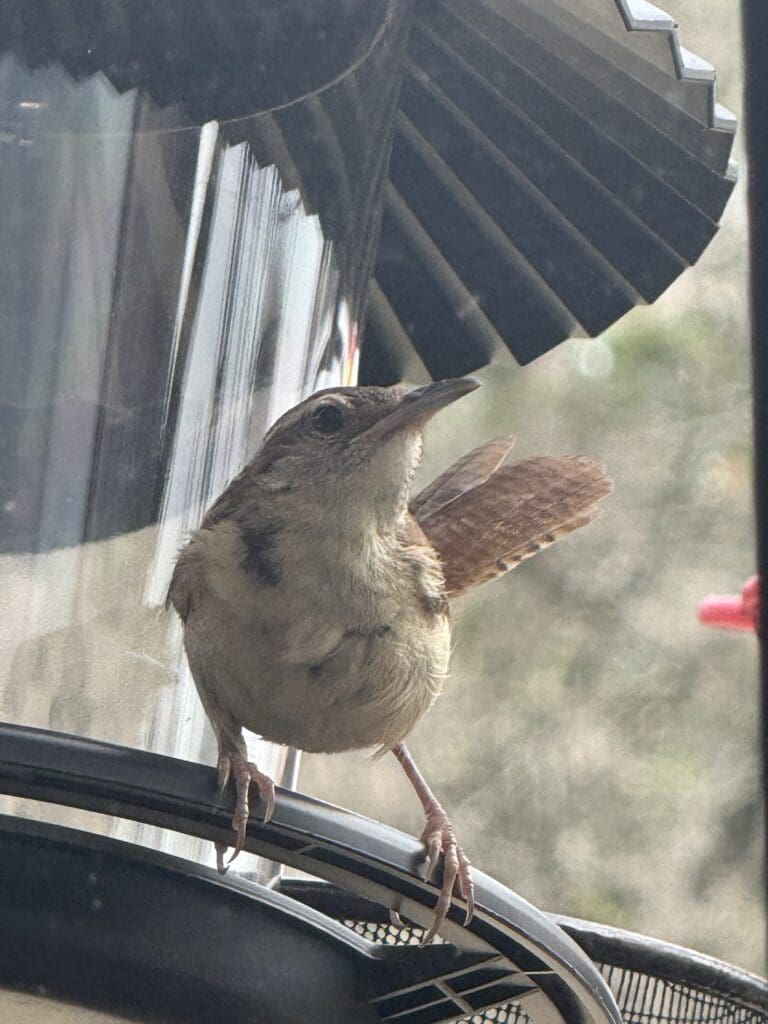
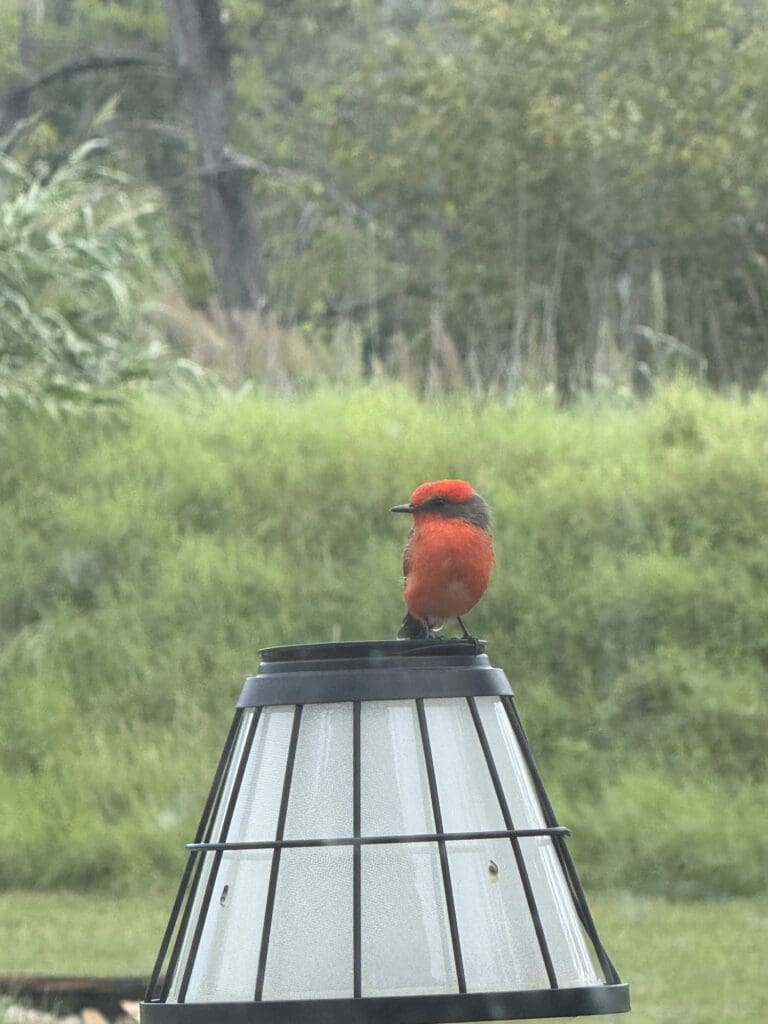
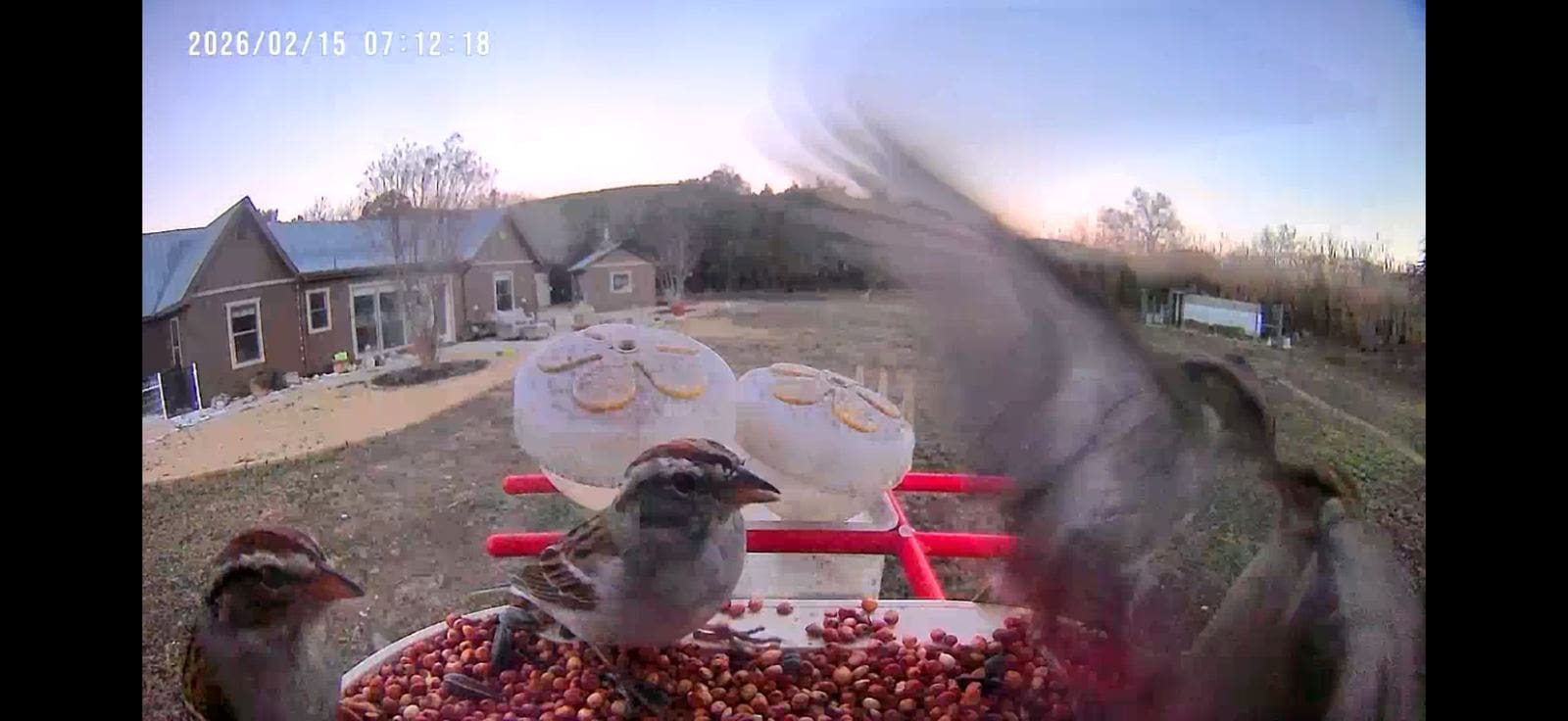
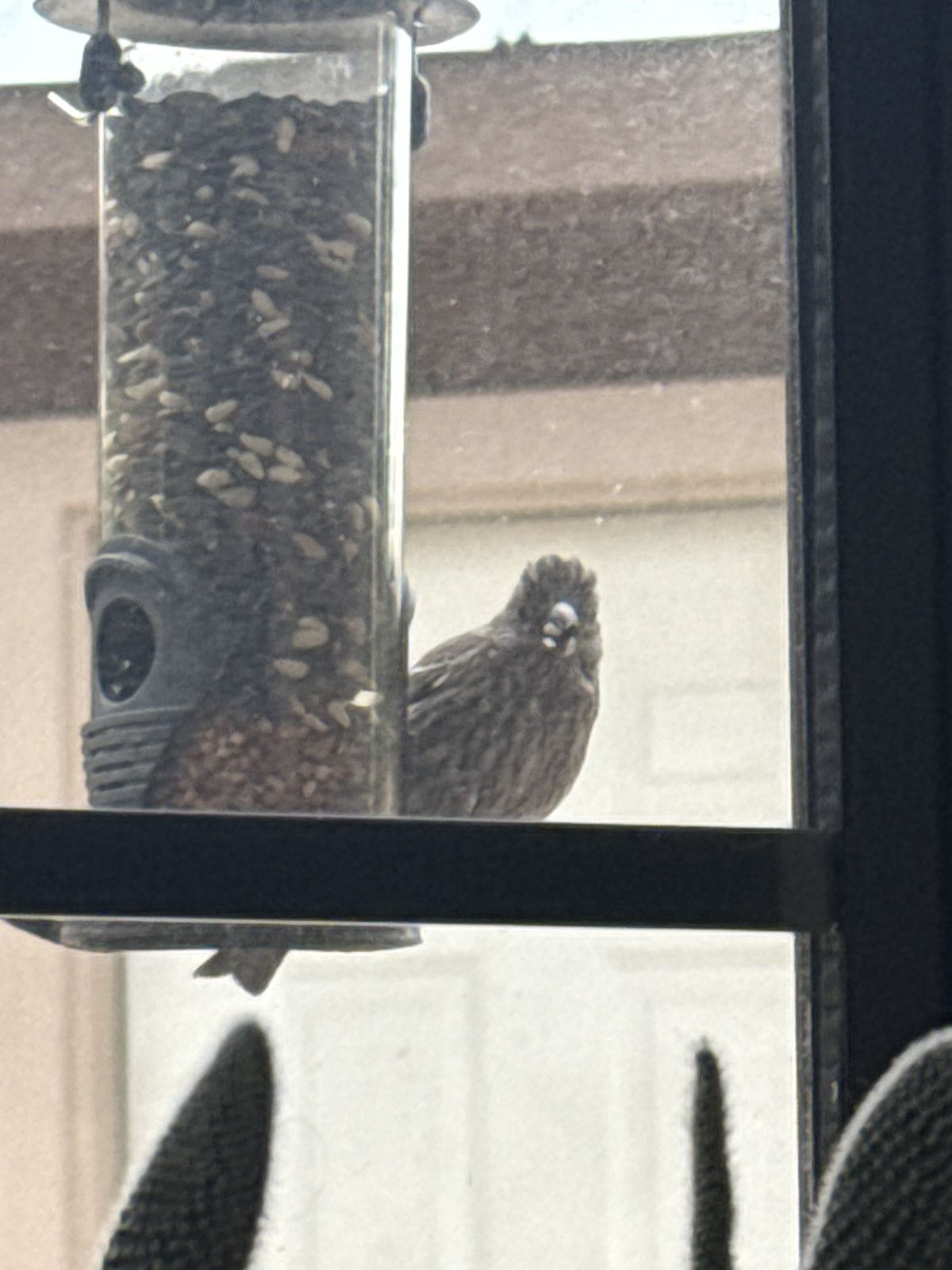
The smart feeder is the one that turned bird-watching into a borderline addiction around here. A little camera clips to the feeder, snaps and IDs every visitor, and pings your phone — that grainy sunrise shot below is straight off mine. For heat, look for one with a sloped, draining tray and a solar lid so you are not swapping batteries in 100° weather. The NETVUE Birdfy is the value pick; the Bird Buddy Pro Solar is the splurge.
Shop the Birdfy →Or the Bird Buddy
2. A mesh feeder (dries fast, won’t mold)
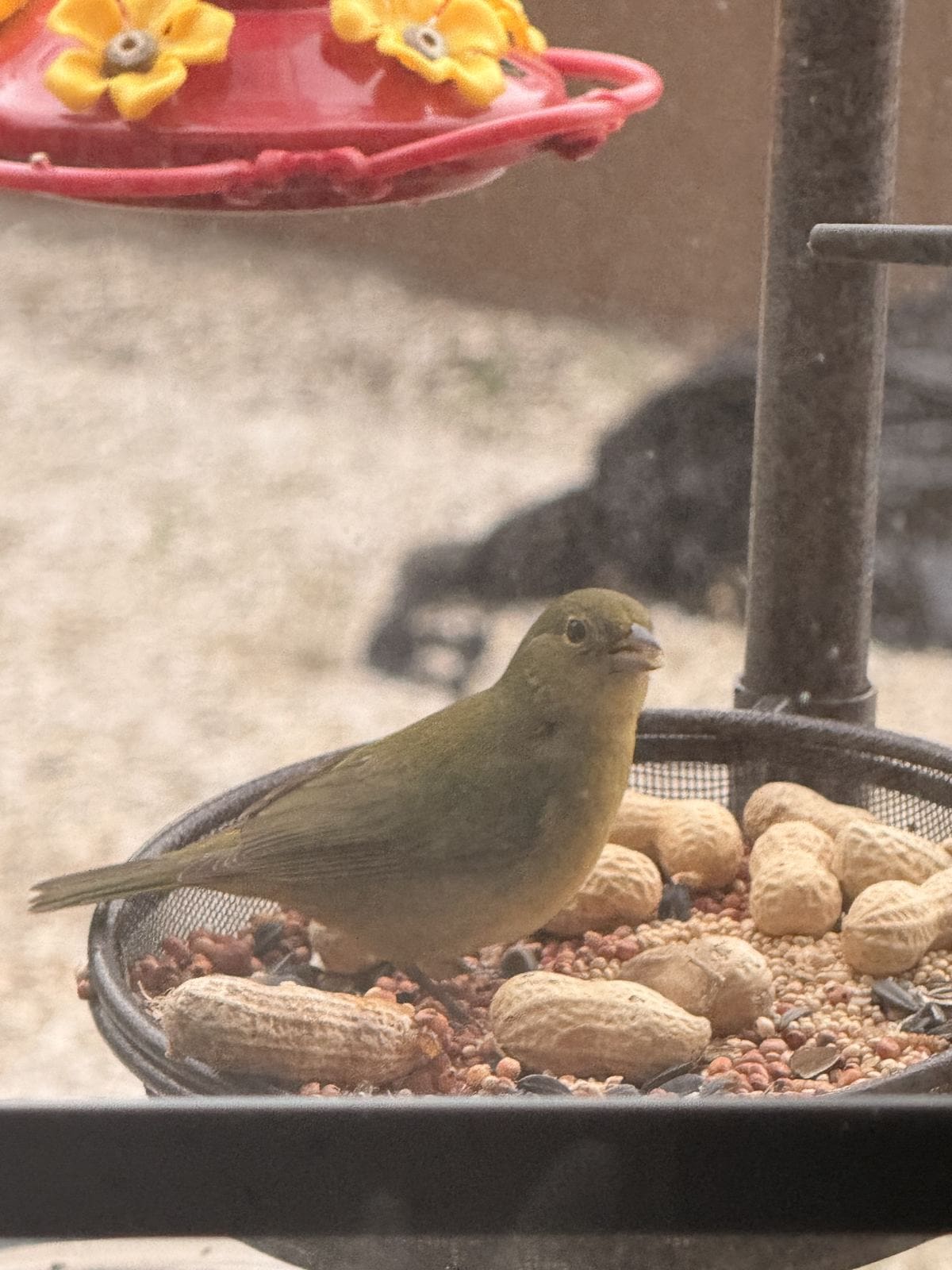
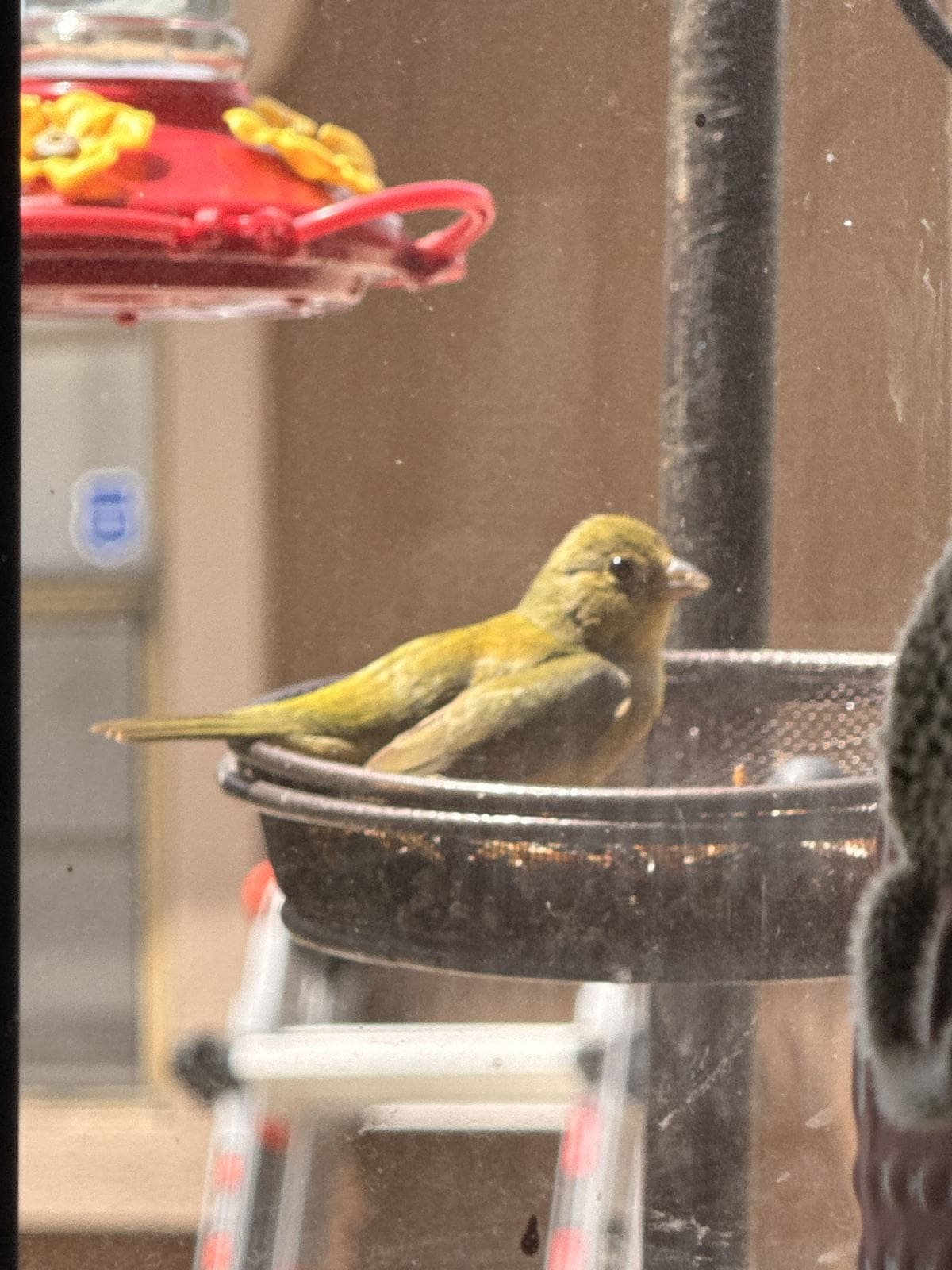
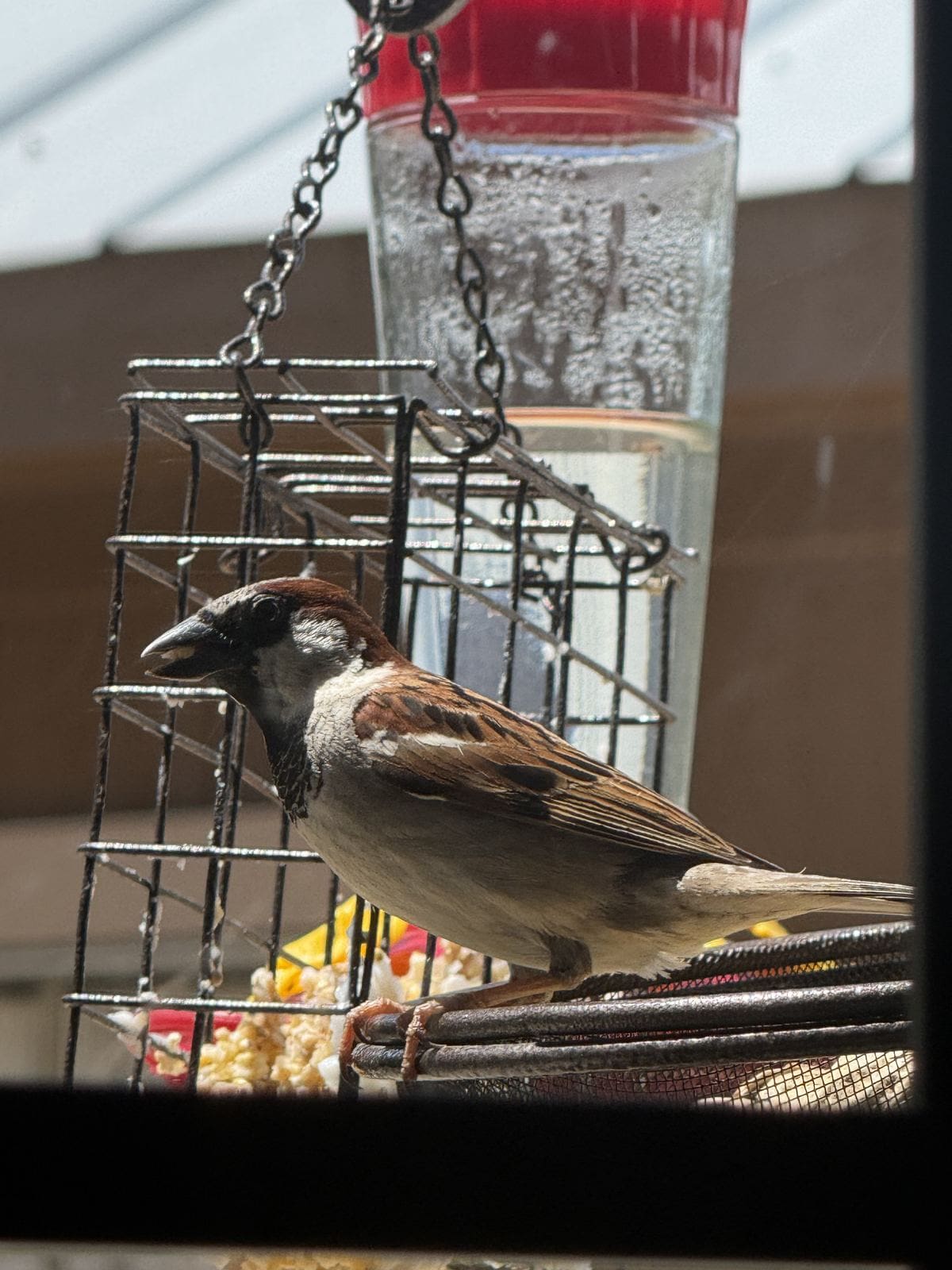
Mesh is the MVP of humid climates. Whether it is a hanging mesh bowl or a mesh tube, air moves through from every side, so seed dries almost as fast as it gets wet and any rain drains straight through the screen instead of pooling — no standing water, no soup. A powder-coated metal mesh feeder also shrugs off sun and squirrels. This hanging mesh bowl is where my painted buntings, cardinals, and the whole sparrow crew line up in the morning; I just keep it topped with a day or two of seed and peanuts at a time.
Shop the Kingsyard mesh feeder →
3. A tube feeder with real drainage
Classic tube feeders are great for finches and chickadees — but only if the base has drainage holes. A sealed tube is a seed-soup factory. The Squirrel Buster Plus has a ventilated, draining base (and, true to its name, keeps the squirrels honest).
Shop the Squirrel Buster Plus →
4. No-melt suet (because regular suet becomes grease)
Suet is a year-round favorite, but in a Texas summer a normal block will literally melt and go rancid. Swap to no-melt suet dough, which is formulated to hold up to around 100°F, and pair it with a simple cage. My sparrows and wrens go through it fast.
5. A saucer-style hummingbird feeder (no leaks, no mold)
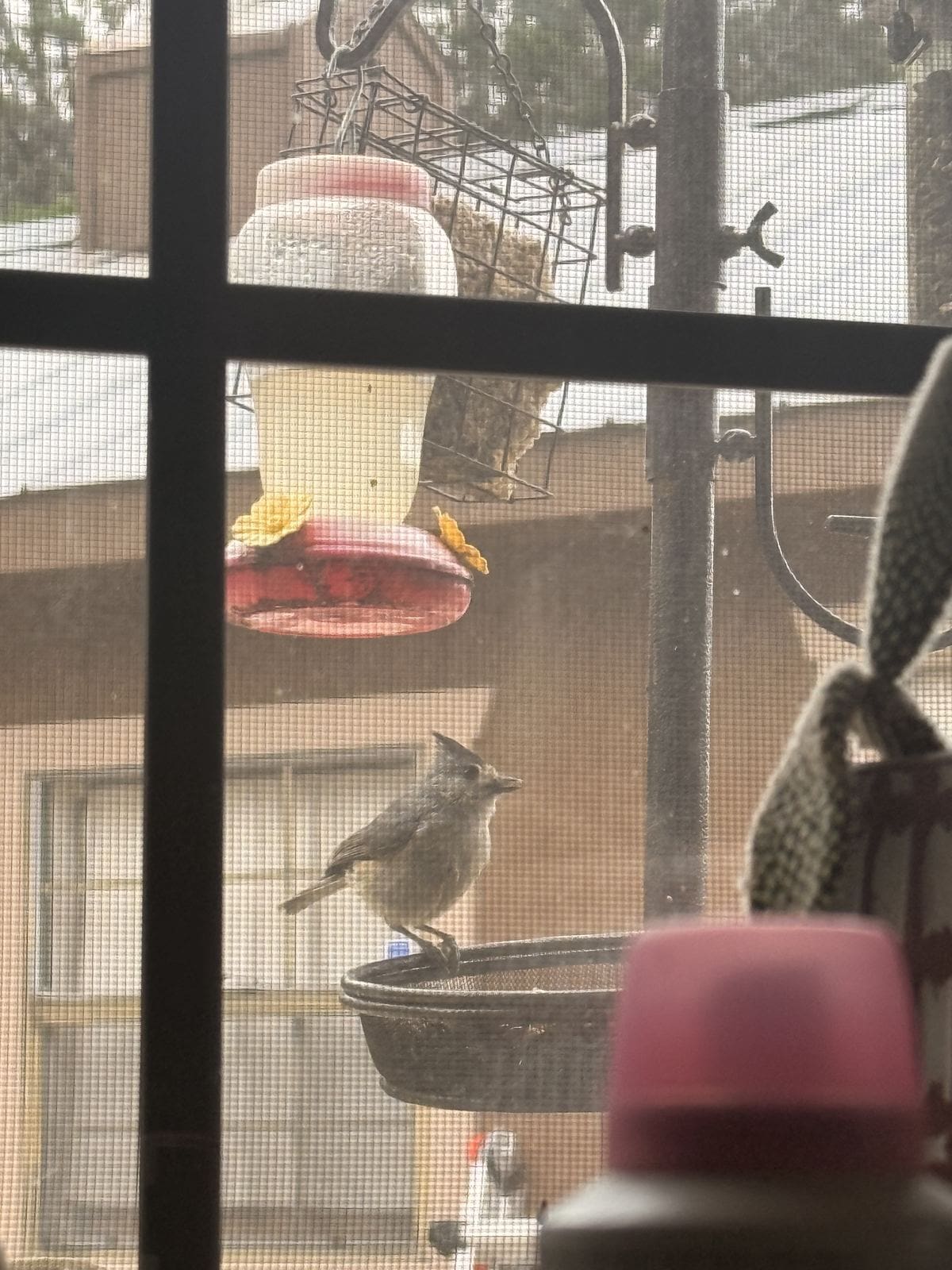
For nectar, skip the pretty inverted bottles — they leak and grow mold in the heat. A flat saucer feeder like the Aspects HummZinger sits below the ports so it will not drip, comes apart in seconds for the every-3-day cleaning summer demands, and many add an ant moat on top.
Seed soup survival tips (no new gear required)
- Fill less, more often — just a few days of seed at a time in summer
- Position feeders for morning sun and afternoon shade
- Add a weather dome or baffle over open feeders
- Dump and scrub every 3 to 4 days; a 1:9 vinegar-water rinse kills mold
- Toss any seed that clumps, smells sour, or starts to sprout
Bird feeders for Texas heat: FAQ
What bird feeder is best for hot, humid weather?
Open and mesh designs win. A metal mesh feeder lets air move through from every side so seed dries fast and rain drains out, instead of sitting wet. Sealed plastic tubes without drainage are the worst offenders in heat.
How do I keep birdseed from molding in the Texas heat?
Three things: use a feeder that drains, only put out a few days of seed at a time so it gets eaten before it spoils, and clean every 3 to 4 days. Move feeders to morning sun and afternoon shade if you can.
Is moldy birdseed actually dangerous to birds?
Yes. Damp, moldy seed can grow fungus that causes aspergillosis, a serious respiratory infection in birds. If seed clumps, smells sour, or sprouts, toss it and rinse the feeder.
How often should I clean feeders and nectar in summer?
Seed feeders every 3 to 4 days in this heat. Hummingbird nectar every 2 to 3 days, sooner if it looks cloudy, since sugar water ferments fast when it is hot.
What is the best smart bird feeder camera on a budget?
The NETVUE Birdfy gives you most of the experience (camera, app, AI bird ID) for a lower price, while the Bird Buddy Pro Solar is the premium pick. For Texas heat, choose a model with a solar lid and a draining tray.
The short version: in Texas, drainage and airflow beat everything. Get the water moving through your feeder instead of pooling in it, keep portions small, and clean often — and you will trade seed soup for a backyard full of buntings. Tell me which feeder your birds love.