How to Even Out Tan Lines (Without Baking in More Sun)
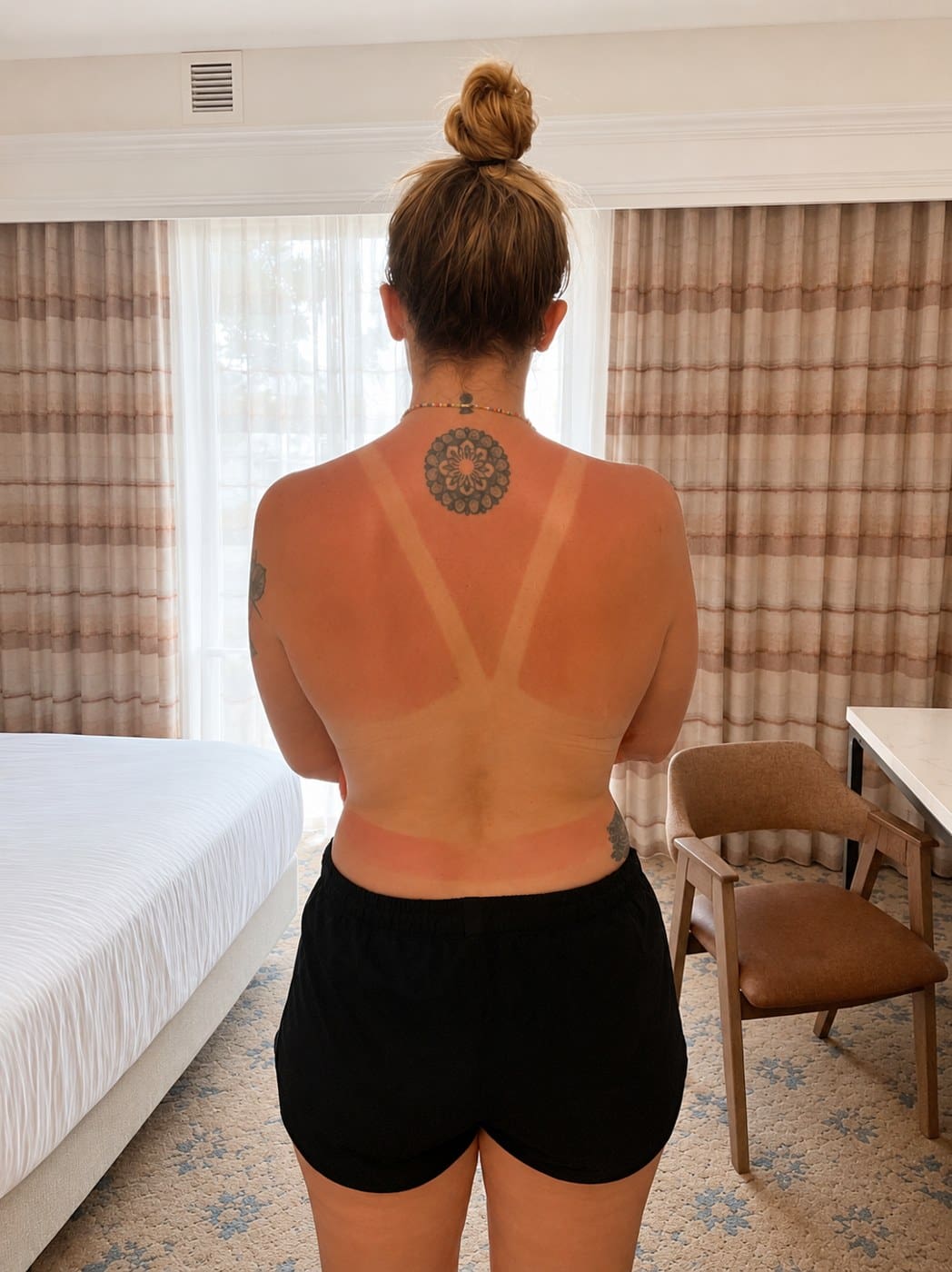
Tan lines are the one souvenir from summer nobody wants. And the instinct — go back out and “tan them away” — is exactly how you make it worse. All that does is deepen the skin that is already dark and burn it, while the pale strips barely move. Fair skin like mine just turns pink and gives up. I went deep on this (Reddit threads, spray-tan-artist tutorials, and a lot of personal trial and error), and every reliable method agrees on one thing: you bring the light parts up to match, you do not bake the dark parts down.
Here is the method that actually works, start to finish.
Step 1 — Exfoliate, but only the light strips
Self-tanner grabs onto dry skin and goes blotchy, so you want a smooth canvas. The trick the pros use: scrub the pale areas to bring them to a clean base, but go gentle around the tan you are trying to keep so you do not strip it. An exfoliating mitt kit a few hours ahead is plenty. (If you also fight rough little bumps, my strawberry legs routine is the same prep step.)
Step 2 — Paint the pale areas, do not coat everything
This is the part most people get wrong. You are not re-tanning your whole body — you are filling in the strips. Use a formula with a color guide (a tint you can see going on) so you know exactly where you have been, and “paint” it onto just the light areas:
- Isle of Paradise Self-Tanning Drops in Light — the peach-toned, color-correcting drops are made for fair skin and let you control the depth drop by drop, so you can match a strip exactly instead of overshooting.
- Bondi Sands Everyday Gradual Tanning Milk — if you would rather build slowly over a couple of days, this is the forgiving, idiot-proof option.
- A kabuki tanning brush — a soft body brush gives you way more control than a mitt for precise areas like a bikini strip or a watch line, and it blends the edges as you go.
Step 3 — Feather the borders so there is no new line
Where the pale meets the tan, buff outward with a clean damp mitt or a little plain lotion so the color fades into the surrounding skin instead of stopping in a hard edge. Build it in two or three thin passes rather than one heavy one — thin layers are what read natural.
Step 4 — Let it develop, and do not panic
Most formulas need 4 to 6 hours to fully develop. It will look darker than the final result at first — that is the cosmetic bronzer, not your actual tan. Rinse in cool water, pat dry, and check it in daylight before you decide whether you need a second pass.
If the line is really stubborn
For a deep contrast, do a second light layer the next day — but skip the exfoliating this time so you are adding color, not sanding it off. And for a one-night emergency (a dress, an event), a color-matched body foundation buffed over the line with a brush hides it instantly until your self-tan catches up.
The face and chest
Tan lines on your décolletage from a tank top are the sneaky ones. A drop or two of the Isle of Paradise drops mixed into your nightly moisturizer evens those out gradually without any risk of streaking your face.
The one rule
Do not try to even tan lines out in the sun. You will burn what is already dark, deepen the contrast, and pale skin just goes pink anyway. Protect everything with good sunscreen, fake the rest, and you are even by tomorrow.
Tan line FAQs
How do you get rid of tan lines fast? The fastest method is sunless tanner applied to the pale areas, not more sun. Exfoliate the light strips, paint on a gradual self-tanner with a color guide, blend the edges, and wait 4–6 hours. You can be even within a day.
Can you even out tan lines naturally? Over time, yes — exfoliating regularly and moisturizing helps the existing tan fade more evenly. But “naturally” is slow (a week or more). Gradual self-tanner is the quick, low-damage shortcut.
Does self-tanner cover tan lines? Yes, when you apply it only to the lighter areas and feather the borders. Use a color-guide formula so you can see your placement, and build in thin layers.
How long do tan lines take to fade on their own? Usually one to three weeks, depending on how deep the tan is and how often you exfoliate.
Disclosure: This post contains affiliate links. As an Amazon Associate and through other affiliate programs, Taylor, Sometimes may earn a small commission from qualifying purchases, at no extra cost to you.