House Finch: The Cheerful Regular at Every Texas Feeder
Some birds make you chase them. The House Finch just shows up, brings friends, and sings while it eats. I love them for it.
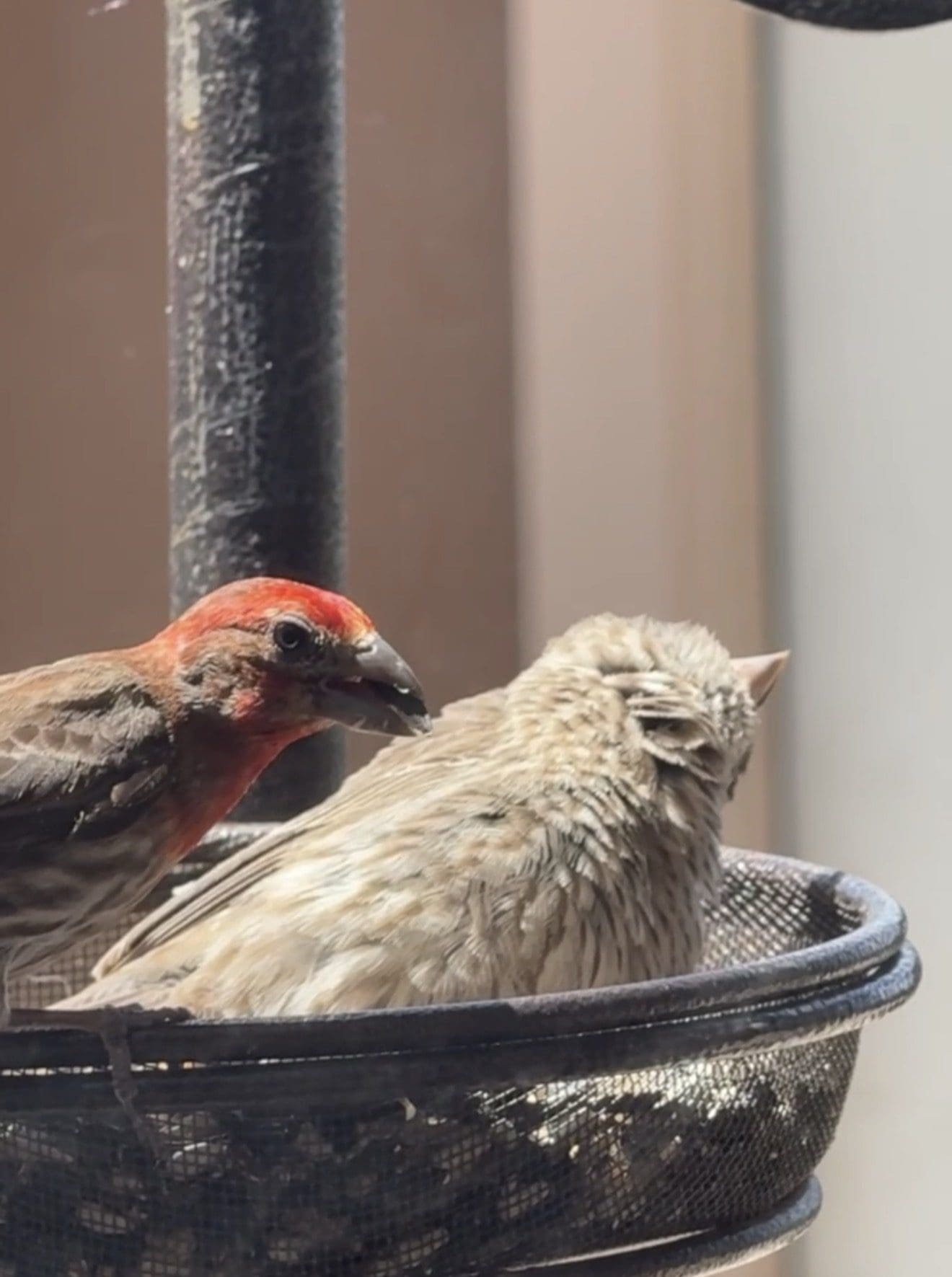
If you’ve hung a feeder anywhere in Texas, you’ve almost certainly met the House Finch: a sparrow-sized bird with a cheerful, twittering song and — on the males — a wash of raspberry red across the head and chest. They’re chatty, social, and refreshingly easy to please.
Here’s a fun secret hiding in that red: it comes from pigments in their food. A male who eats a richer, carotenoid-packed diet turns a deeper red, and females are known to prefer the reddest males — so color is basically a résumé. Some birds even come out orange or yellow depending on what they’ve been eating.
The quick facts
When you’ll see it in the Hill Country
House Finches are year-round Texans. You’ll have them in every season, with the biggest, noisiest flocks gathering at feeders in late winter and spring as breeding ramps up.
Where the House Finch comes from
This one has a great American story. House Finches are native to the western U.S. and Mexico — originally a desert and foothill bird. In the 1940s, caged “Hollywood finches” sold illegally as pets were released on Long Island, New York. They survived, spread, and over a few decades the eastern and western populations met in the middle. Today they’re one of the most widespread birds on the continent.
They’re mostly non-migratory, so the finches you feed in January are likely the same families you’ll watch nest in spring.
What it eats
House Finches are unusually committed vegetarians for a feeder bird — their diet is almost entirely seeds, buds, and fruit, even when feeding their chicks. That’s rare; most songbirds stuff their nestlings with insects.
At the feeder they adore black-oil sunflower and nyjer (thistle) seed.
How to bring it to your yard
House Finches are the easiest birds on this list to attract — the real skill is keeping them healthy once the flock arrives.
🪶 Feeder field guide
Fill a tube feeder with black-oil sunflower seed, or offer nyjer in a finch feeder. They’ll find it fast and bring the whole gang.
A simple tube or window feeder is perfect — they’re happy to crowd on together. Add a shallow birdbath and you’ve got a year-round finch hangout.
Keep that feeder clean. House Finches are prone to a contagious eye disease (finch conjunctivitis) that spreads at dirty, crowded feeders. Scrub with a 10% bleach solution every couple of weeks, and take feeders down for a few days if you spot a bird with crusty, swollen eyes.
Hear it & map it
A long, bubbly, twittering warble that often ends in a slightly harsh, buzzy wheer. It’s the cheerful background music of a Texas morning.
Telling them apart
Males wear a wash of raspberry red over the head, throat, and chest, fading into a brown, streaky back and belly — though some come out orange or even yellow depending on their diet. Females skip the color entirely: they’re a plain grayish-brown, heavily streaked underneath, with a blurry, plain face.
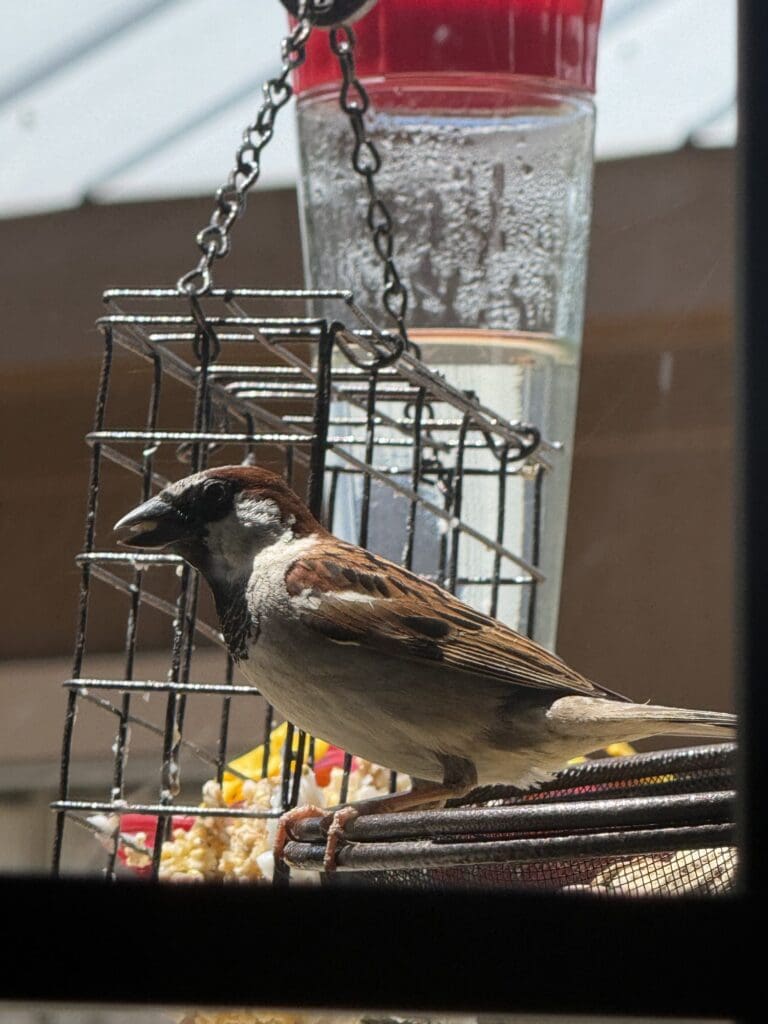
The bird people most often confuse them with is the female House Sparrow. The trick: a female House Finch is streaky down the belly with a small, pointed seed-eater’s bill, while a House Sparrow is cleaner-breasted with a stout, pale bill and a plain face.
Nesting & raising young
House Finches will nest in almost any nook — hanging baskets, door wreaths, ledges, porch lights, and vents are all fair game. The female builds a cup nest and lays four to five pale blue, lightly spotted eggs, and a pair will often raise several broods in a season.
Here’s the unusual part: unlike most songbirds, which stuff their chicks with insects, House Finches feed their babies an almost entirely vegetarian diet of regurgitated seeds.
💡 Did you know?
- A male’s red comes straight from pigments in his food, so a well-fed male is a redder male — and females notice.
- Every House Finch east of the Rockies descends from a small group of caged birds released on Long Island in the 1940s.
- They’re happy to sing their bubbly warble nearly year-round.
Common questions
Why is my House Finch orange or yellow instead of red?
Its diet didn’t contain enough red pigments while it was growing those feathers. Color varies bird to bird based entirely on food.
House Finch or Purple Finch?
House Finch males are red mainly on the head and chest with a brown, streaky belly. Purple Finches look “dipped in raspberry juice” all over and lack the heavy belly streaks.
What seed works best?
Black-oil sunflower and nyjer (thistle) in a tube feeder will keep a flock coming back.
Why does one of my finches have crusty, swollen eyes?
That’s House Finch eye disease, a contagious conjunctivitis. Take feeders down for a few days and scrub them with a 10% bleach solution before refilling.
A feeder full of chattering finches is the easiest joy to add to a quiet house. It all started when I turned one window into a tiny bird sanctuary during my work-from-home days — here’s how I built it (and why it steadied me).