Eastern Bluebird: The Little Symbol of Happiness in Your Backyard
If the Painted Bunting is a showstopper, the Eastern Bluebird is the friend who stays all year. And ours do.
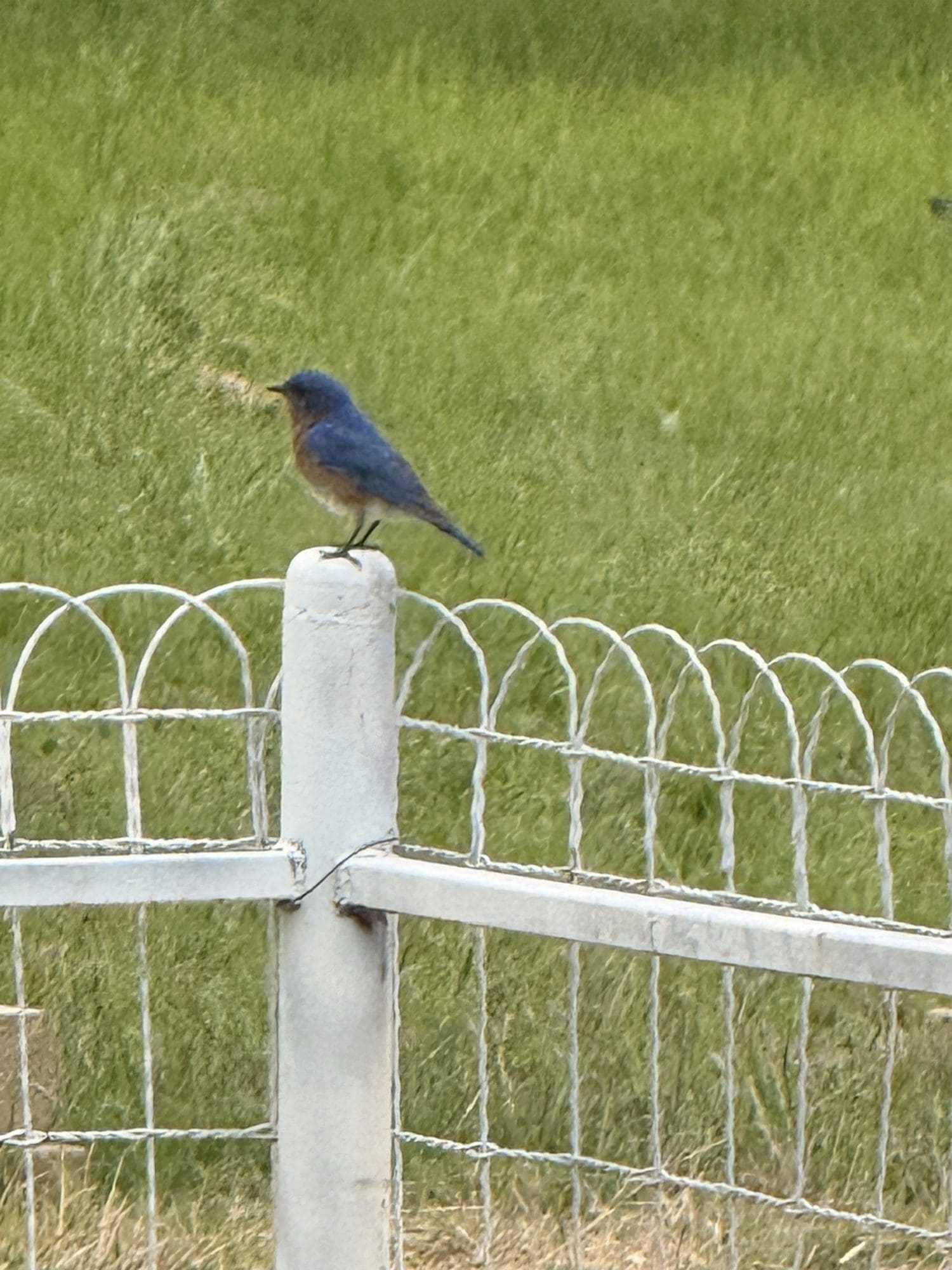
There’s a reason cultures have tied the bluebird to happiness for centuries. That rusty-orange breast under a wash of deep sky-blue, glimpsed on a fence post at golden hour, is just good for the soul. Eastern Bluebirds are thrushes — cousins of the robin — and they love the open, grassy country that defines so much of the Hill Country.
Best of all, they’re residents here. While the buntings are wintering in Mexico, bluebirds are still working our fence lines, which makes them one of the most rewarding birds to build your yard around.
The quick facts
When you’ll see it in the Hill Country
Eastern Bluebirds are with us all twelve months in Central Texas. Spring and early summer are their breeding peak — prime time for nest boxes — and in winter they roam in loose, berry-hunting flocks.
Where the Eastern Bluebird comes from
Eastern Bluebirds range across the entire eastern and central United States, down into Mexico and Central America. Across most of Texas they’re year-round residents, though the northernmost populations migrate south for winter.
Their great comeback story is worth knowing: bluebird numbers crashed in the 20th century as old orchards disappeared and aggressive non-native House Sparrows and starlings took the tree cavities they nest in. A grassroots movement of people putting up nest boxes brought them roaring back — a rare and genuinely hopeful conservation win you can be part of from your own yard.
What it eats
In the warmer months bluebirds are insect specialists — beetles, crickets, grasshoppers and spiders, usually taken by dropping onto prey from a low perch.
In fall and winter they pivot hard to fruit: sumac, juniper (our “cedar”) berries, hackberry and mistletoe. They’re not really seed birds, so the way to their heart isn’t a sunflower feeder.
How to bring it to your yard
Bluebirds are wonderfully hostable — you just have to speak their language, which is mealworms and real estate.
🪶 Feeder field guide
Mealworms are the magic word — live ones are irresistible, dried ones work too, offered in a small dish or tray. Add berry-rich native plants (sumac, juniper, beautyberry) and they’ll work your yard in winter.
Put up a proper bluebird nest box — 1.5-inch hole, mounted on a smooth pole with a predator baffle, facing an open area. Keep feeders and boxes near open lawn with scattered low perches they can hunt from.
Monitor the box and gently remove House Sparrow nests if they try to take over — sparrows are a bluebird’s biggest nest-box rival. A baffled metal pole keeps rat snakes and raccoons out, which is what makes or breaks a successful brood.
Hear it & map it
A soft, low, warbling chur-lee, chur-wee — one of the gentlest, most contented sounds in the backyard. Once you learn it, you’ll hear them before you see them.
Telling them apart
The male is the classic postcard bluebird — deep, rich blue above with a rusty-orange throat and breast and a clean white belly. The female wears the same pattern in softer pastels: grayish overall with blue washing into the wings and tail and a gentler orange breast.
Juveniles throw people off every summer: they have spotted, speckled breasts (a giveaway that bluebirds are thrushes, like young robins) with just a hint of blue in the wings.
Nesting & raising young
Eastern Bluebirds are cavity nesters — they can’t excavate their own holes, so they rely on old woodpecker cavities and, happily, nest boxes. The female builds a tidy grass cup and lays three to seven pale blue eggs, often raising two or three broods a season.
Both parents feed the chicks, and in some families the young from an earlier brood even help feed their younger siblings. This dependence on cavities is the whole reason nest boxes matter so much to the species.
💡 Did you know?
- A hunting bluebird can spot a caterpillar in the grass from more than 60 feet away.
- Organized “bluebird trails” of nest boxes helped pull the species back from a serious 20th-century decline.
- The eggs are usually sky-blue, but a small percentage of females lay pure white ones.
Common questions
What’s the fastest way to attract bluebirds?
A dish of mealworms plus a properly placed nest box, near open lawn with a low perch or two and a water source.
What size entrance hole does a bluebird box need?
1.5 inches. It’s big enough for bluebirds but helps keep larger competitors like starlings out.
Do bluebirds leave Texas in winter?
Mostly no — here they’re year-round residents, roaming in small berry-eating flocks once nesting season ends.
Why won’t bluebirds use my box?
Usually placement (they want open foraging nearby), the wrong hole size, or House Sparrows claiming it first. Move it to face open ground and keep sparrows out.
There is something about a resident bluebird that makes a place feel like home. It all started when I turned one window into a tiny bird sanctuary during my work-from-home days — here’s how I built it (and why it steadied me).