Painted Bunting: The Rainbow Songbird of the Texas Hill Country
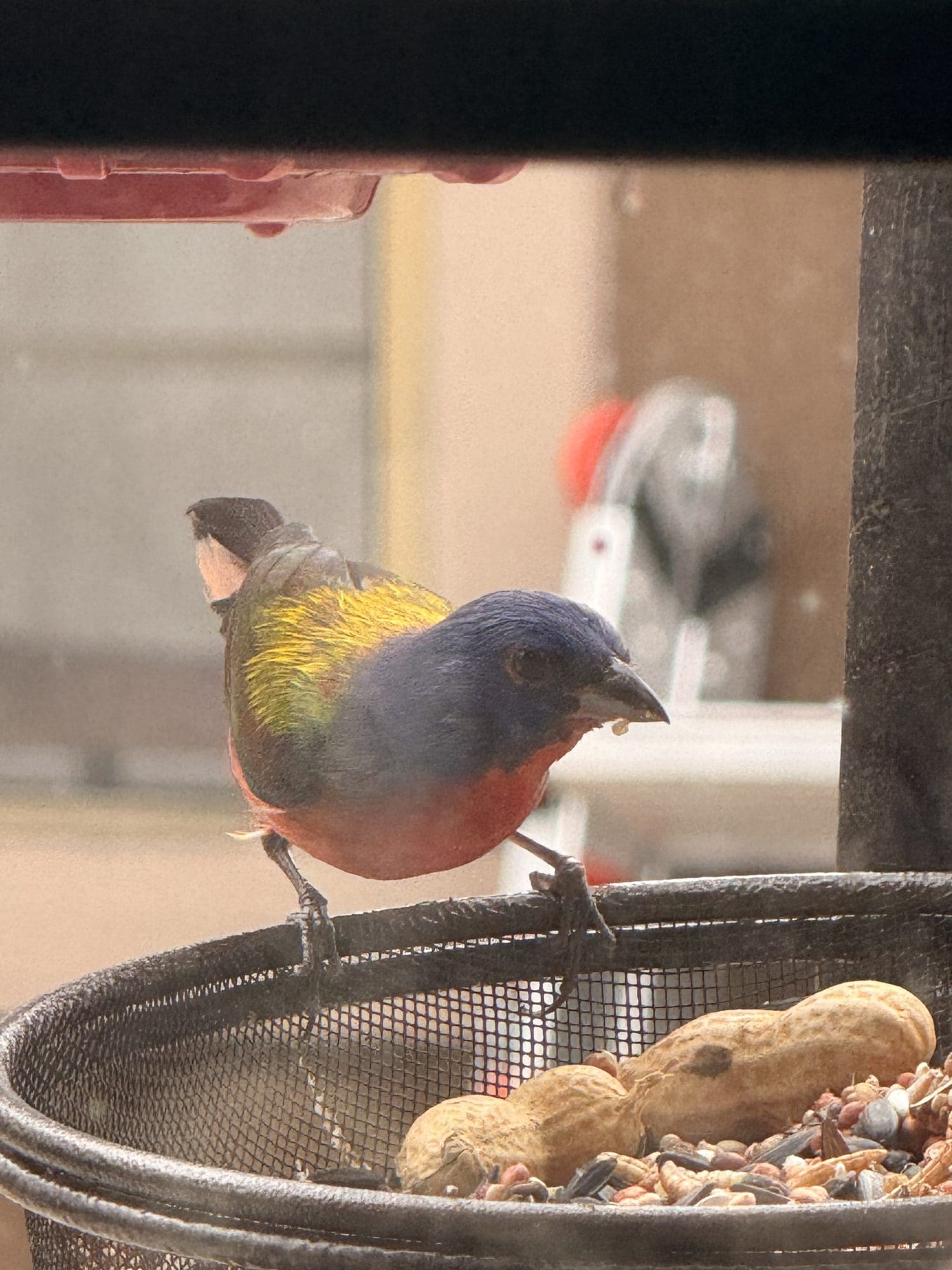
The first time a male Painted Bunting landed on my window feeder, I genuinely thought someone had let a tropical pet loose. Nothing in North America looks like him.
If a child colored a bird and refused to stay in the lines, you’d get a male Painted Bunting: a cobalt-blue head, a chartreuse-green back, and a chest of pure tomato red. French speakers in Louisiana call it nonpareil — “without equal.” They’re not wrong.
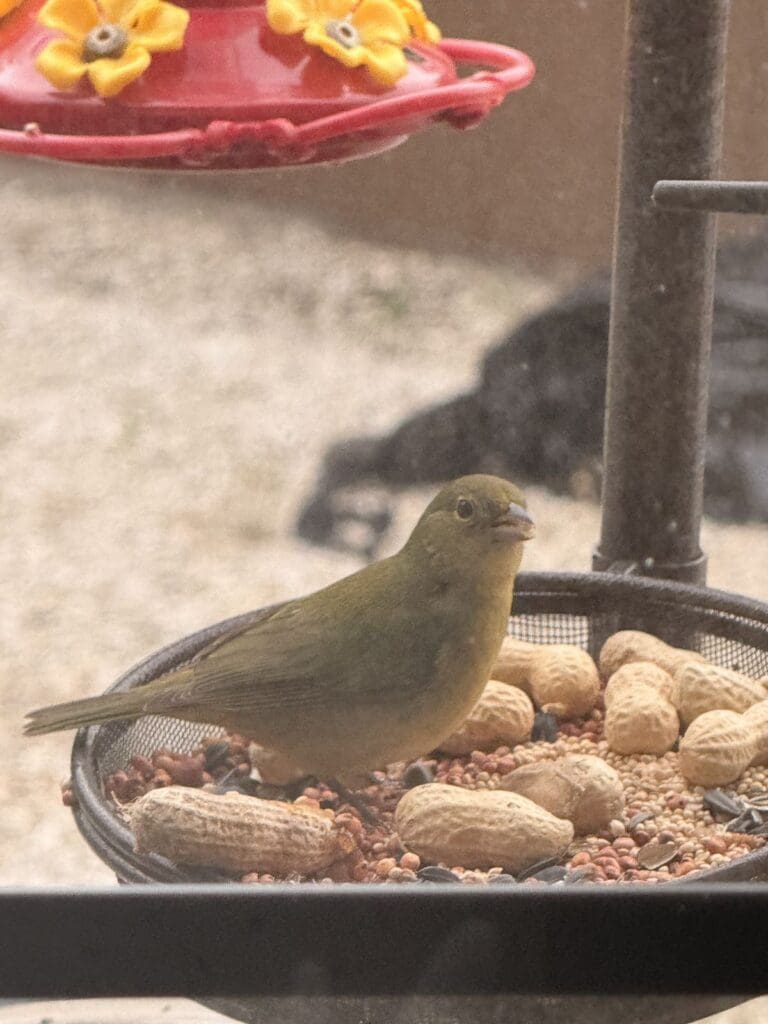
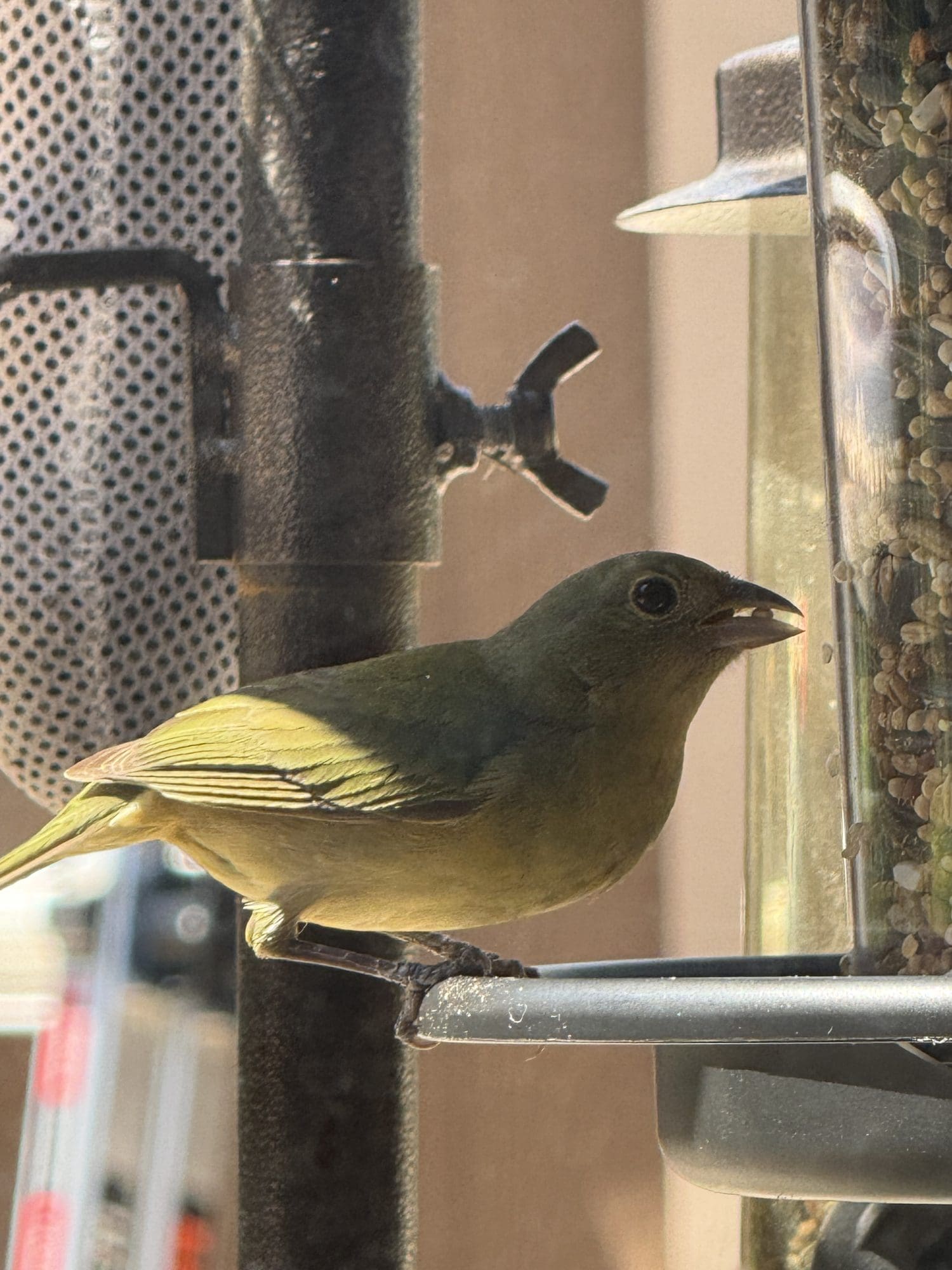
Here in the Hill Country we sit right in the heart of their breeding range, which means from spring through late summer these little stunners are ours to host. The females and young birds are a soft, glowing parrot-green — just as beautiful, and the ones people most often overlook.
The quick facts
When you’ll see it in the Hill Country
Painted Buntings are warm-season visitors. They arrive in Central Texas around April, nest through the summer, and slip back toward Mexico by early fall.
Where the Painted Bunting comes from
Painted Buntings nest in two completely separate populations. Ours is the western group, breeding across Texas, Oklahoma, Louisiana and nearby states. A second, genetically distinct population lives along the Atlantic coast from the Carolinas to Florida.
Come fall, our western birds funnel down into Mexico and Central America for the winter. They do something unusual on the way: many stop in northwestern Mexico to molt mid-journey, swapping out worn feathers before finishing the trip — a behavior called molt-migration. So the bird at your feeder in July is, quite literally, refueling for an international flight.
What it eats
For most of the year Painted Buntings are seed-eaters, specializing in the small seeds of native grasses. During the breeding season they switch to a protein-rich insect diet — caterpillars, grasshoppers, spiders — to fuel nesting.
That seed habit is your way in: they have a deep love of white proso millet.
How to bring it to your yard
Painted Buntings are shy and ground-loving, so the trick is the right seed plus a sense of safety.
🪶 Feeder field guide
Offer white proso millet — it’s their favorite by a mile — with black-oil sunflower as a backup. A dedicated millet or finch feeder pulls them in better than generic mixed seed.
Place the feeder near (but not buried in) shrubs or a brush pile so they have a quick escape route. They feel safest within a short hop of cover. A low platform or window feeder works beautifully, and a shallow water source seals the deal.
Patience. Buntings are skittish and may watch your feeder for days before committing. Keep it stocked and quiet through April and May, and once one finds you, they tend to return to the same yard year after year.
Hear it & map it
The male’s song is a sweet, rambling warble delivered from an exposed perch — a tinny, musical jumble that carries surprisingly far on a still Hill Country morning.
Telling them apart
The adult male is unmistakable — there is simply nothing else in North America with that blue head, green back, and red breast. The catch is that he doesn’t get there overnight: it takes a Painted Bunting roughly two years to grow into full adult color. A first-year male looks almost exactly like a female and can even sing and breed while still green.
Females and young birds are a solid, glowing lime-to-parrot green, palest on the belly. If you see a chunky little finch-shaped bird at your feeder that’s greener than any leaf, that’s a Painted Bunting — no other Texas feeder bird wears that color.
Nesting & raising young
Once paired, the female does the building: a neat woven cup tucked low in dense shrubs, briars, or vine tangles, usually within a few feet of the ground. She lays three to four pale, speckled eggs and often raises two broods in a Hill Country summer while the male guards the territory from a high, sunny perch.
Their low, hidden nests make them frequent targets for Brown-headed Cowbirds, which lay their own eggs in the bunting’s nest — one more reason that brushy native cover around your yard genuinely helps them succeed.
💡 Did you know?
- Their dazzling looks made them one of the most heavily trapped cage birds in the world — illegal trapping on the wintering grounds is still a real conservation worry.
- That French nickname, nonpareil, literally means “without equal.”
- They migrate at night, navigating by the stars.
Common questions
Why is my Painted Bunting green instead of rainbow?
It’s either a female or a young male. Males don’t reach their full multicolor plumage until their second year, so a green bird in spring is completely normal.
When do Painted Buntings arrive in Central Texas?
Usually early-to-mid April, and most have left for Mexico and Central America by late September.
What’s the single best way to attract one?
White proso millet in a feeder placed near shrubby cover. Put it out by early April and keep it stocked and quiet.
Will the same birds come back next year?
Often yes — Painted Buntings tend to be loyal to a good territory and return to the same yards summer after summer.
A rainbow at the window has a way of resetting a hard day. It all started when I turned one window into a tiny bird sanctuary during my work-from-home days — here’s how I built it (and why it steadied me).