Best Bath for Anxiety: How to Actually Make It Work
The best bath for anxiety isn’t just a hot tub and whatever bath bomb was on sale at Target. I’ve been taking intentional baths for years — it’s genuinely one of the few things that reliably turns my nervous system down from a rolling boil to something resembling calm — and there’s a real difference between a bath that works and a bath that just gets you clean and slightly pruney.
Here’s exactly how I set mine up, including the products I actually use and the science behind why it works at all.
Why a Bath for Anxiety Actually Works (This Part Is Real)
Before I get into the setup, I want to briefly explain why baths are legitimately useful for anxiety rather than just vibes-based wellness content, because the science is interesting and it makes you take the whole thing more seriously.
Warm water activates your parasympathetic nervous system — the part of your nervous system responsible for rest, digestion, and generally not panicking. As your body adjusts to the heat, your heart rate slows, your blood pressure drops, and your stress hormones start to ease off. Additionally, your body temperature rising triggers serotonin release, which is the same mechanism at work in exercise-based mood improvement. One study found that afternoon baths taken just twice a week produced a moderate but persistent mood lift comparable to physical exercise.
There’s also something more elemental happening. Submersion in warm water mimics the sensation of being held — it triggers oxytocin, reduces the noise in your nervous system, and forces your body into a horizontal-ish position that your brain associates with safety and rest. It works on you whether you decide it will or not.
Furthermore, it forces your phone out of the equation. That alone might be 40% of why it helps.
The Magnesium Question
I use magnesium flakes in almost every bath I take, and I think they’re worth using. The honest version of the science is that transdermal magnesium absorption is still being studied — the research is promising but not fully settled — however, the case for magnesium in baths is strong enough that I’m not stopping.
Here’s why: magnesium is called the relaxation mineral because it regulates the body’s stress response system and helps lower cortisol levels. Most people are deficient in it, and the deficiency gets worse under stress because your body burns through magnesium faster when you’re anxious. Supplementing orally can cause digestive issues, but transdermal absorption through a bath bypasses the GI tract entirely. Magnesium chloride flakes (what most “magnesium bath flakes” are) also have a higher concentration of pure magnesium than Epsom salts and may absorb more easily.
The practical recommendation: two cups of magnesium flakes in warm — not scalding — water, soak for at least 20 minutes. The water temperature matters. Very hot water can actually reduce the efficacy of the minerals, so aim for comfortable and warm rather than as-hot-as-you-can-stand.
I alternate between straight magnesium flakes and a Lush bath bomb depending on what my nervous system needs. Magnesium nights are the intentional decompression nights. Lush bath bomb nights are the treat-yourself nights. Both work.
The Bath Setup That Actually Helps Anxiety
The environment you create matters as much as what’s in the water. Your nervous system doesn’t turn off just because you got in the tub — you have to set it up to let go.
The light situation: This is the thing most people skip and it makes the biggest difference. Blue light from overhead bathroom fixtures suppresses melatonin and keeps your brain alert. Turn off the overhead light. I use a planet night light — the kind that projects stars and nebula color across the ceiling — and it completely changes the energy of the room. Dim, warm, ambient light tells your brain the day is winding down. It sounds minor. It is not minor.
My recommendation: This starry light from Amazon
The shelf: A bath table next to the tub the tub is the difference between a bath and a spa experience. Mine holds a candle, my drink, whatever I’m reading, and my phone if I’m playing music — placed face-down, on do not disturb. The shelf means nothing is perched awkwardly on the edge of the tub, nothing falls in, and your attention stays in the bath instead of managing logistics.
My recommendation: This stone end table from Amazon
The pillow: Get a real bath pillow — one of the full-size ones with suction cups, not the thin little neck rolls. You want your head fully supported and your body able to go completely horizontal. The bath pillow is what makes the difference between 15 minutes and 40 minutes, because you’re actually comfortable rather than just tolerating the position.
My Recommendation: These massive luxury pillows from Amazon
What Goes in the Water
For a genuine anxiety bath, the water itself should do most of the work. These are the options I rotate through depending on the night:
Magnesium flakes — my default and the most functional option. Two cups, dissolved before you get in. This is the one I use when I genuinely need to reset.
Dr. Teal’s bubble bath — the lavender or eucalyptus versions. Affordable, smells good, and the bubble situation makes the bath feel more luxurious which matters more than it should.
Dr. Teal’s bath oil — this goes in alongside whatever else I’m using. It keeps skin from drying out, and the fragrance adds an aromatherapy layer that actually has research behind it. Lavender specifically has been shown to reduce anxiety markers.
Lush bath bomb — for the nights when what you need is color and fizz and the feeling of being a little indulgent. I don’t use these on the same nights as magnesium flakes because too much going on in the water dilutes everything. Pick your night.
One thing worth noting: very hot water is less effective for relaxation than warm water, and it strips skin faster. The sweet spot is around 98–100°F — warm enough to feel genuinely immersive, not so hot that you’re boiling.
What Goes Around the Bath
Candle — fragrance reinforces the sensory transition from day-mode to rest-mode. Lavender, eucalyptus, sandalwood, or frankincense are the anxiety-specific ones worth seeking out. Frankincense especially is known for helping release worry — there’s a reason it’s been used in contemplative spaces for thousands of years.
Something to drink — water, sparkling water, herbal tea. I’m not going to tell you not to take a bath with a glass of wine because I’m not your mother, but alcohol and the heat and dehydration is a real combination, so at minimum also have water.
What Comes After
The bath sets up the relaxation. What you do after determines whether it holds.
The stone bath mat — I have a diatomite stone mat and it changed my post-bath experience completely. It absorbs water instantly so you’re not standing in a puddle, dries between uses, and doesn’t mildew. It sounds like a minor detail and it is genuinely one of my favorite things in my bathroom.
My recommendation: White plain stone bath mat from Amazon
The towel warmer — if you don’t have one and you take baths for anxiety or relaxation, get one. Wrapping up in a warm towel immediately after a bath keeps your nervous system from spiking back up with the cold air exposure. The warmth continuation matters. Additionally, it’s one of those small daily luxuries that makes the whole ritual feel intentional rather than accidental.
My recommendation: Time control towel warmer from Amazon
The Parachute towel — oversized, heavy, genuinely soft. The towel you use after an anxiety bath should feel like something. Dollar store towels are for gym bags.
My recommendation: Parachite striped Resort Towel
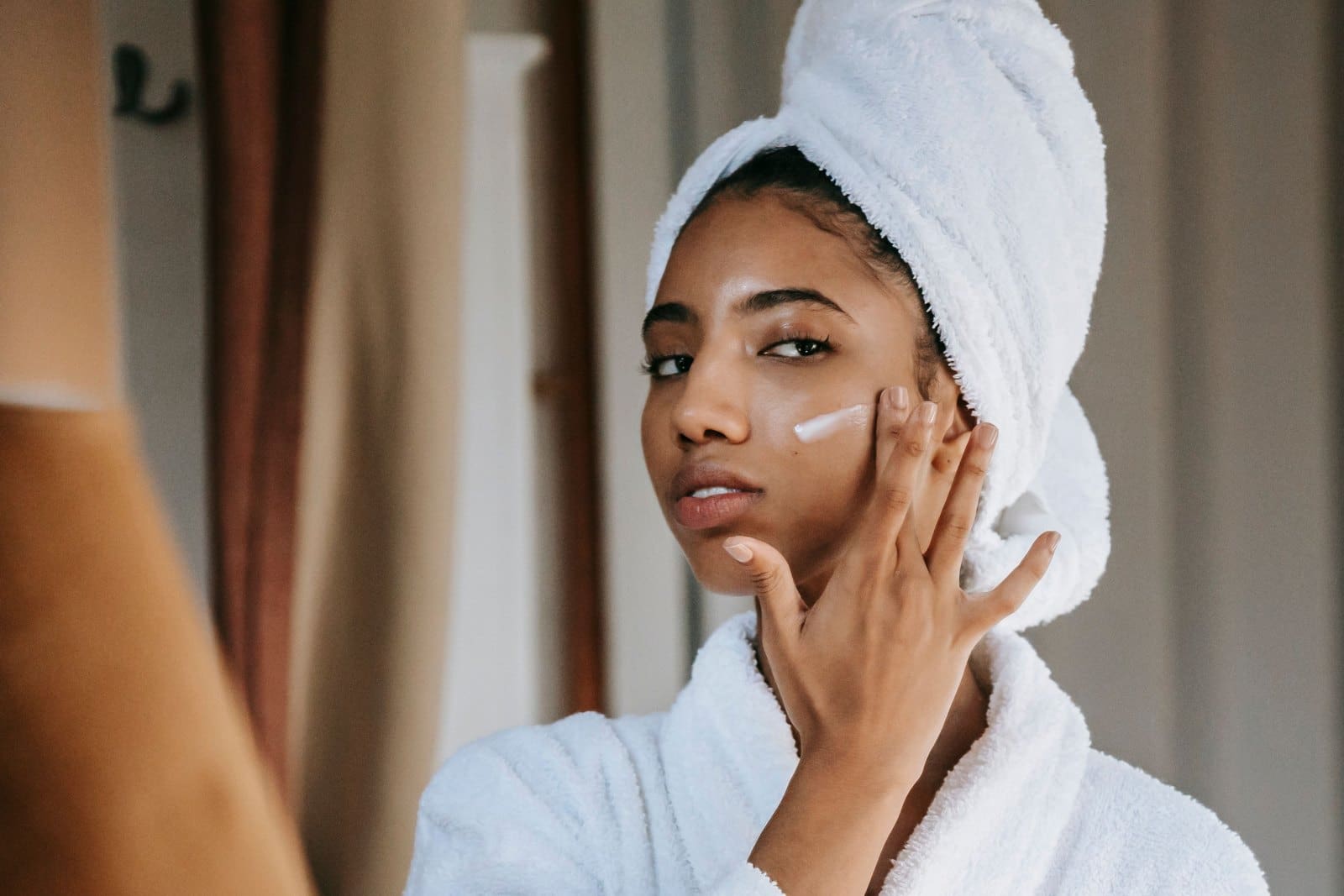
The hair towel — I use the Kitsch microfiber hair towel to deal with my hair without having to think about it. Hair wrapped, body warm, bath complete. The less cognitive load after the bath the better — you want to stay in that calm state as long as possible, not immediately start problem-solving your hair situation.
My recommendation: Kitsch Hair Towel
The Full Anxiety Bath Routine, Start to Finish
Before you get in: Set the room. Planet light on, overhead light off. Candle lit. Shelf loaded with what you need. Phone on do not disturb, face-down or in the other room. Towel warming. Run the water to 98–100°F, add two cups of magnesium flakes and let them dissolve, add bath oil or bubble bath if using.
In the bath: 20–40 minutes minimum. The first 10 minutes your brain will try to keep doing the day. Let it. By 15 minutes something shifts. Stay in past the shift. No scrolling. Music or nothing. Close your eyes for at least part of it.
Getting out: Onto the stone mat. Into the warm towel immediately. Hair towel on. Lights still low if possible. Resist the urge to immediately check your phone.
After: You’ve done the work. The bath activated your parasympathetic nervous system, the magnesium started doing its thing, and the warm towel kept the transition gentle. The goal is to carry this state into sleep or at least into the rest of the evening. So: don’t immediately open email. Don’t start a show that’s going to wind you back up. Let the bath work.
The best bath for anxiety is the one you actually take, set up intentionally, and stay in long enough for it to work. The setup matters. The products matter. But mostly, the commitment to actually stopping and being in it for 30 minutes matters most.
That’s the part that’s genuinely hard and also genuinely worth it.
Frequently Asked Questions About the Best Bath for Anxiety
What is the best thing to put in a bath for anxiety? Magnesium flakes are the most functional option — they help lower cortisol and calm the nervous system through transdermal absorption. For a more sensory experience, a Lush bath bomb or Dr. Teal’s lavender bubble bath adds aromatherapy benefits that reinforce relaxation. The honest answer is that the water temperature and the environment you create matter as much as what you add to the water.
How long should you stay in a bath for anxiety relief? At least 20 minutes — that’s the minimum window for magnesium absorption and for your parasympathetic nervous system to actually shift into rest mode. The first 10–15 minutes your brain will still be running the day. Try to stay past that point. 30–40 minutes is the sweet spot for genuine decompression.
How hot should a bath be for anxiety? Around 98–100°F — warm enough to feel immersive and relaxing, but not as-hot-as-you-can-stand. Very hot water actually works against you: it can reduce the effectiveness of magnesium, dehydrate you faster, and spike your heart rate rather than slow it. Warm and comfortable is the goal.
Are magnesium flakes better than Epsom salt for anxiety? Magnesium flakes are magnesium chloride, while Epsom salt is magnesium sulfate. Flakes have a higher concentration of pure magnesium and may absorb more easily through the skin. Epsom salt has the advantage of sulfate, which supports glutathione production. Both work — magnesium flakes are worth trying if Epsom salt hasn’t done much for you, or if you have sensitive skin.
Can you use a bath bomb and magnesium flakes together? Technically yes, but it dilutes the effectiveness of both. If you’re taking a bath specifically for anxiety relief, use the magnesium flakes on their own. If you’re in more of a treat-yourself mode, use the bath bomb. They don’t cancel each other out, but splitting the purpose of the bath usually means neither works as well.
What lighting is best for an anxiety bath? Dim, warm light — or no overhead light at all. Blue light from standard bathroom fixtures suppresses melatonin and keeps your brain in alert mode, which is the opposite of what you’re trying to achieve. A galaxy or planet projector night light, candles, or a small salt lamp all work. The light shift alone makes a noticeable difference in how quickly your nervous system settles.