Plate Walls Are Back: How to Build One That Looks Collected, Not Cluttered
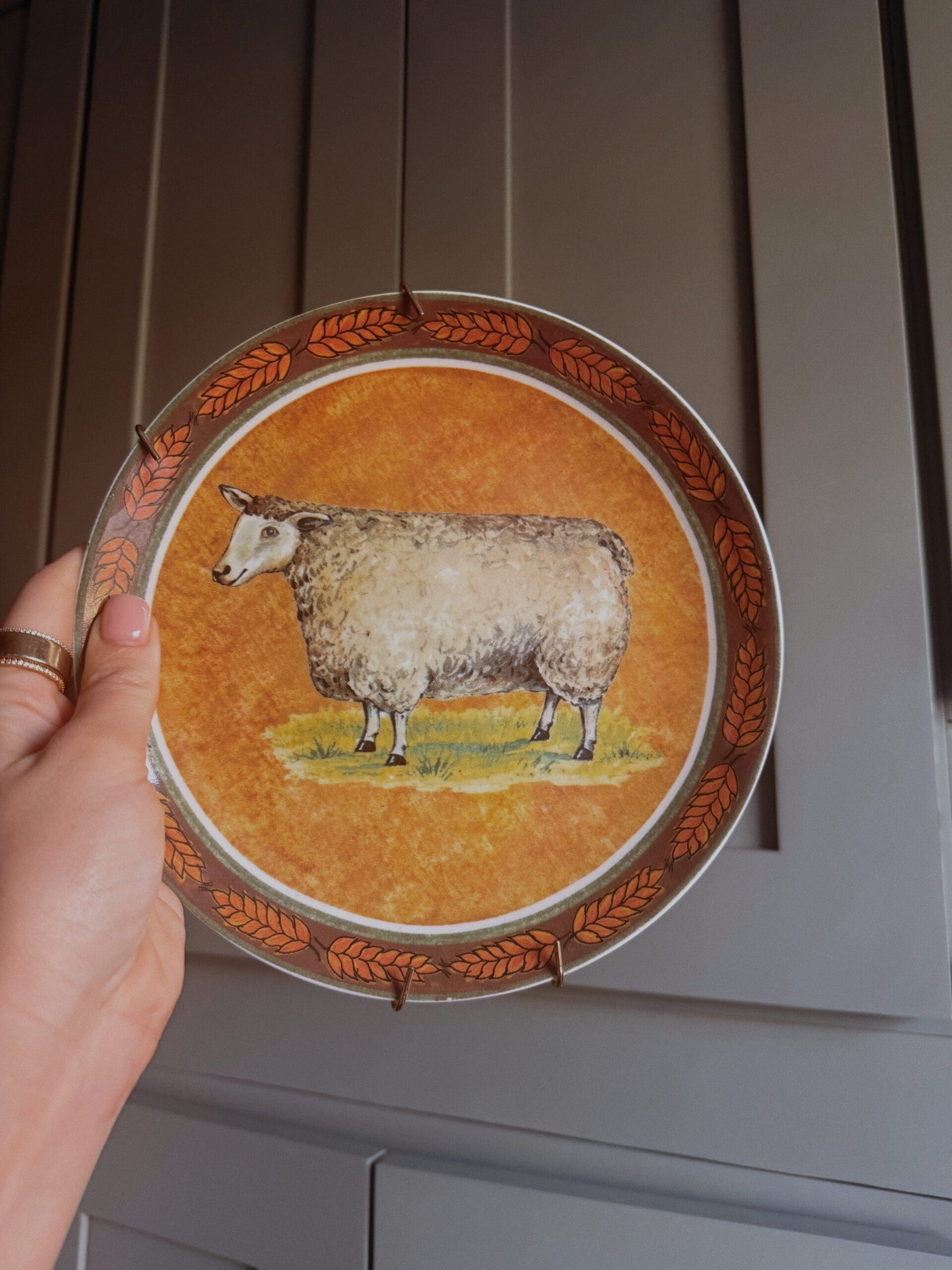
If you’ve been thinking about starting a plate wall, I have one sheep plate and a wall I keep staring at. That’s where I am. Not a finished, perfectly styled dining room moment — just a sheep plate, a pomegranate plate I let get away, and a vision I’m slowly building toward.
That’s actually the right way to do a plate wall. The ones that look like they took years to collect took years to collect. Here’s what I’ve learned about doing it in a way that looks intentional rather than like you panic-bought twelve matching plates from Amazon at midnight.
Why Plate Walls Are Back in 2026
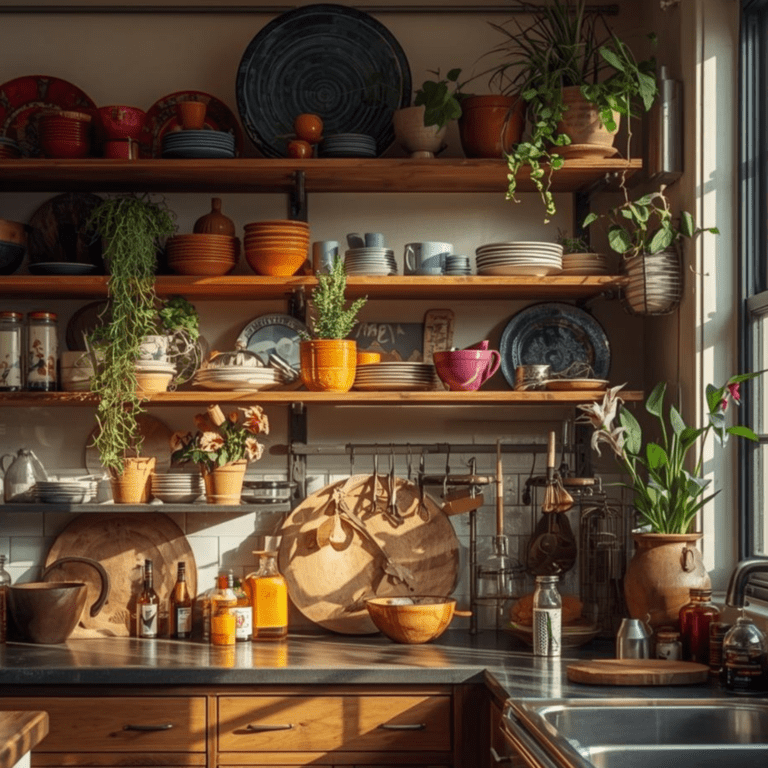
Plate walls never fully disappeared, but they’re having a genuine moment right now because the whole design conversation has shifted. After years of white walls and negative space as a personality, people are done. Grandma chic, maximalism, rooms that look lived-in — that’s where things are headed in 2026, and the plate wall fits perfectly.
Done right, a plate wall reads as curated and personal. Done wrong, it looks like a restaurant chain trying to seem cozy. The difference is almost entirely in how you approach building it.
What Makes a Plate Wall Look Intentional
The plate walls that look bad share a few things: too matchy, too uniform in size, or too random with nothing holding them together visually. The ones that work feel like they were found over time — because they were, or because they were designed to look that way.
A loose color story. The plates don’t need to match, but there should be a thread. A consistent rim color, a repeated motif — botanicals, animals, a specific era. Mine is going to be mostly neutral with green accents, because the sheep plate has a green rim and I’m building around it.
Varied sizes with logic. Larger plates anchor the arrangement, smaller ones fill in the gaps. You want movement, not rows.
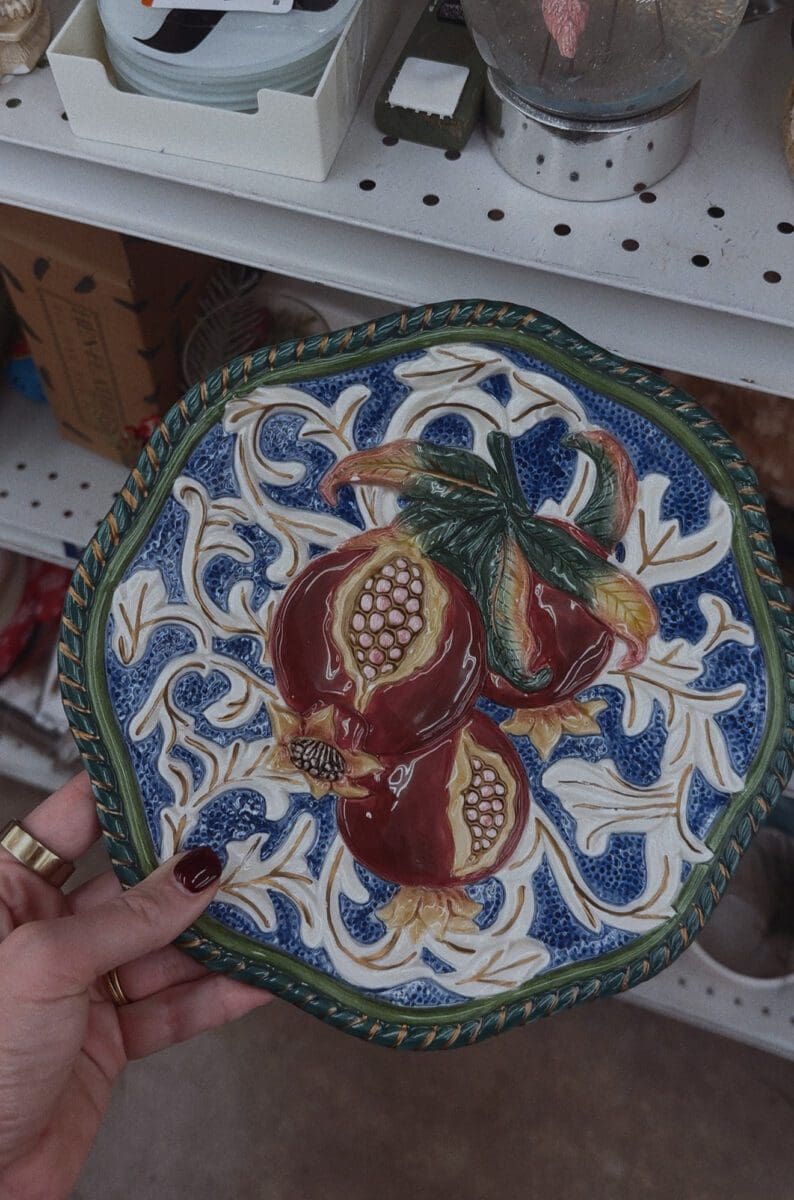
At least one plate with a story. The pomegranate plate I passed up would have been that plate. I’m still thinking about it. Buy the plate.
Odd numbers. Groups of three, five, seven. Even numbers feel static. Odd numbers feel like something that happened naturally over time.
How I’m Building Mine
I have one plate right now. Green outer edge, sheep in the center — simple, a little charming, the exact kind of thing I want more of. I found it thrifting and immediately knew it was the starting point.
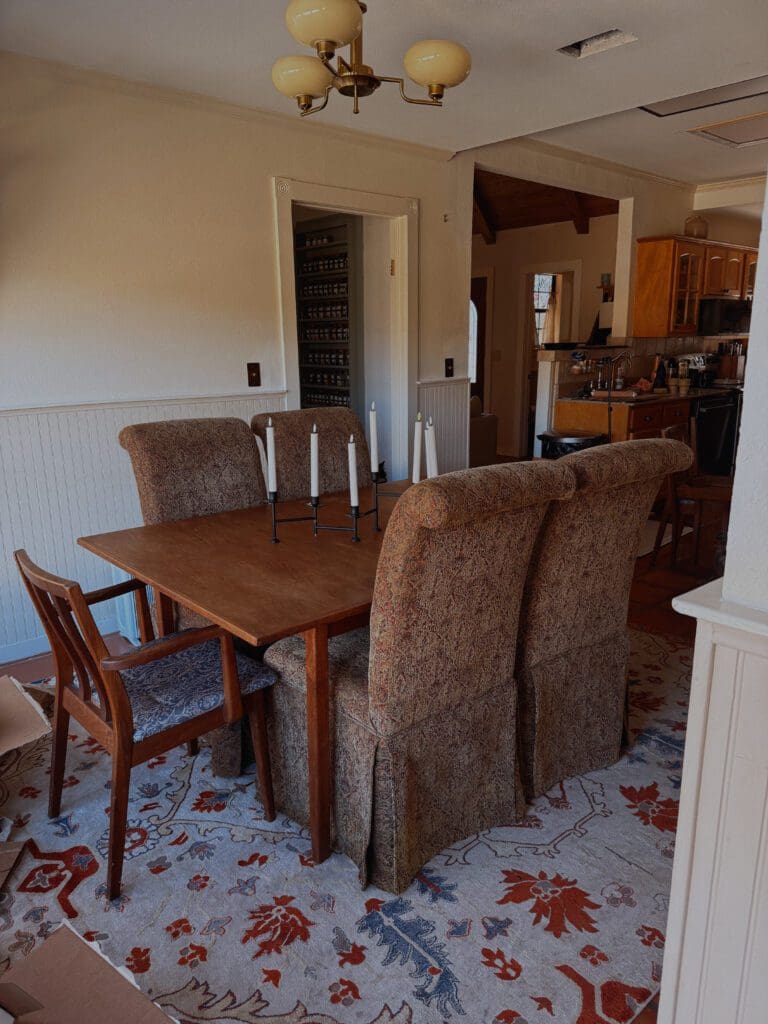
My dining room already has vintage flower art on one wall. The plate wall is going on the opposite wall, so I’m thinking about how the two sides talk to each other without competing. The direction I’m heading: mostly neutral or white plates with hand-painted details, nature motifs, green accents throughout. Collected over years, or at least looking like it.
No rush. That’s the whole point.
Where to Find Plates Worth Hanging
Thrift stores and estate sales. The best source, and the most patient one. You’re not going to find your whole plate wall in one trip — and that’s correct. Look for hand-painted details, unusual subjects, interesting rims. Pass on anything that looks mass-produced.
Etsy. Search “vintage decorative plate,” “antique transferware,” “hand-painted plate wall.” Good for finding specific colors or motifs you can’t stumble across at Goodwill.
Your own kitchen. Plates you already have that are too pretty to eat off of. Inherited pieces. Wedding china you never use. These are often the most personal additions to a plate wall.
Anthropologie. If you want new plates that look collected, they do this well. More expensive but consistently the right aesthetic.
How to Arrange a Plate Wall Before You Commit
Before a single nail goes in the wall, do this: trace each plate on kraft paper, cut out the shapes, and tape them to the wall. Live with the arrangement for a few days. Move things around. This is the step most people skip and regret.
The arrangement that looks right on the floor almost never looks right on the wall. The paper method lets you figure that out without filling your wall with mistakes.
A few things that help: start with your largest plate as the anchor, slightly off-center. Work outward from there. Keep two to three inches between plates — close enough to read as a grouping, far enough that each one has room. Step back from across the room regularly. That’s how it’s actually going to be seen.
What to Use to Hang Them
Disc plate hangers. Adhesive discs that stick to the back of the plate with a small hook. Nearly invisible from the front, clean look, good for plates you actually care about. This is what I’m using.
Spring-loaded wire hangers. The classic option. They work, they’re cheap, they’re visible from certain angles on some plates. Fine for most decorative plates.
Command strips. Only for very lightweight plates. Not ideal for anything irreplaceable.
For a wall you’re building long-term, disc hangers are worth it. The clean back matters when you’re looking at it every day.
The Slow Build Is the Right Approach
I’m not going to have a finished plate wall this month. Probably not this year. And that’s actually the correct way to do this — adding plates as you find the right ones instead of buying a matched set and calling it done.
The walls worth having are the ones that took time. Mine is one sheep plate in. Everything else gets added when it’s right.
If you see a plate you love, buy it. That’s the whole strategy.
Frequently Asked Questions About Plate Walls
Are plate walls still in style in 2026? Yes — plate walls are one of the defining home decor trends of 2026, driven by the shift toward maximalism, grandma chic, and collected interiors. Done with intention, a plate wall reads as personal and curated rather than dated.
How many plates do you need for a plate wall? Most plate walls use between 7 and 15 plates depending on wall size, but you can start with one and build from there. Odd numbers — groups of three, five, or seven — tend to look more natural than even groupings.
How do you arrange a plate wall? Trace each plate on kraft paper, cut out the shapes, and tape them to the wall before hanging anything. Live with the arrangement for a day or two. Start with your largest plate slightly off-center as the anchor and work outward, varying sizes as you go.
What kind of hangers do you use for a plate wall? Disc plate hangers are the cleanest option — they adhere to the back of the plate and are nearly invisible from the front. Spring-loaded wire hangers also work and are widely available. Avoid Command strips for anything heavy or irreplaceable.
Where do you find plates for a plate wall? Thrift stores and estate sales are the best source for plates that look genuinely collected. Etsy is good for finding specific colors or motifs. Anthropologie carries new plates designed to look vintage. Your own kitchen is worth checking — inherited pieces often make the most personal additions.
How do you make a plate wall look intentional and not cluttered? Keep a loose color story running through the plates — they don’t need to match, but they should connect. Vary sizes with a logic: larger plates anchor, smaller ones fill gaps. Keep 2–3 inches of space between plates. Include at least one plate with a personal story.