
How to Style Open Shelving in Your Kitchen Without It Looking Like a Mess
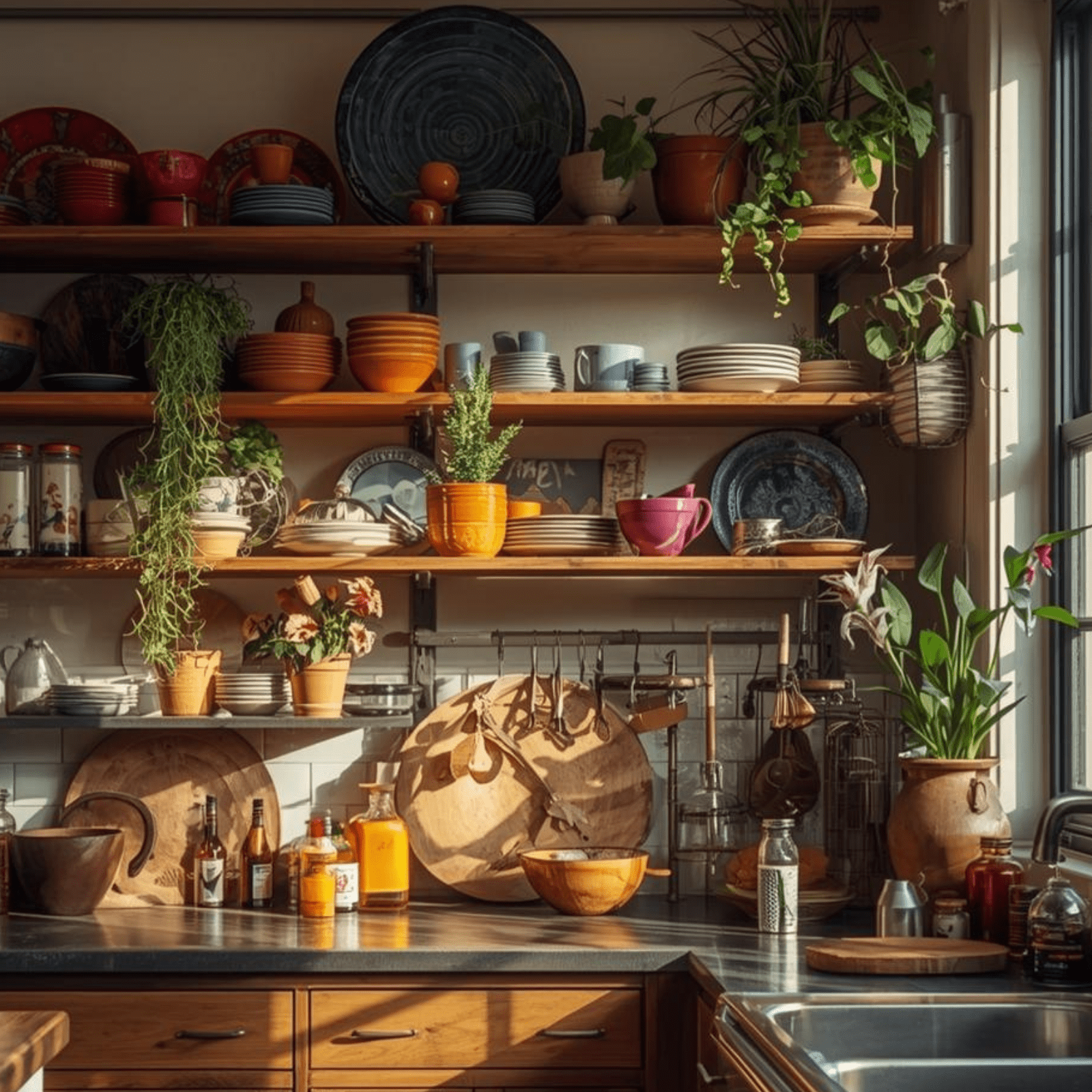
Have you been asking yourself, “how to style open shelving in a kitchen” in hopes of getting the courage to finally commit. Open shelving in kitchens sounds charming in theory.
Sunlight hitting stacked dishes. Neutral ceramics. A trailing plant that somehow thrives in steam and chaos.
But in reality?
Open shelves can turn into a visual junk drawer faster than you can say “minimalist aesthetic.”
If you’ve installed open shelving and immediately regretted it — or you’re considering it but scared of the mess — you’re not alone.
Here’s how to style open shelving in your kitchen so it feels intentional, functional, and beautiful — not cluttered. Let’s really look at how to style open shelving in a kitchen while keeping your sanity.
1. The 3-Category Rule That Makes Open Shelves Actually Work
The biggest mistake people make with open shelving is treating it like extra cabinet storage.
It’s not.
Open shelves are part storage, part styling moment.
To keep them from looking chaotic, follow this simple structure:
The 3-Category Rule:
Every shelf should include a mix of:
- Functional Everyday Items
- Plates
- Bowls
- Glasses
- Mugs
- Decorative Elements
- Small framed art
- A plant or greenery
- A candle
- A ceramic bowl
- Textural or Organic Pieces
- Wooden cutting boards
- Woven baskets
- Linen napkins
- Cookbooks
If everything is practical, it looks like a storage unit.
If everything is decorative, it looks fake.
The balance is what makes open kitchen shelves look styled instead of messy.

2. What to Display vs. What to Hide (Be Honest With Yourself)
This is where most people go wrong.
Not everything deserves shelf space.
Ask yourself:
- Do I use this weekly?
- Is it visually cohesive?
- Would I feel okay if this was in a photo?
Display:
- Neutral dishware
- Matching glassware
- Cookbooks you actually cook from
- Cutting boards
- Pretty pantry jars
Hide:
- Mismatched plastic containers
- Branded packaging
- Small appliances you don’t use daily
- Overly busy patterns
If it doesn’t elevate the look, it goes behind a cabinet door.
Open shelving works best when you edit ruthlessly.
3. Budget-Friendly Shelf Styling: What I Bought and What I Thrifted
You do not need to spend hundreds of dollars to make open shelving look good.
Here’s what’s worth buying new:
- Matching everyday plates
- Clear pantry jars
- A simple linen set
- One good ceramic serving bowl
Here’s what I thrifted:
- Vintage glassware
- Wooden cutting boards
- Old cookbooks
- A small brass tray
Thrifted pieces add character and prevent your shelves from looking like a catalog page.
The goal isn’t perfection.
It’s warmth.

4. How to Keep Open Shelves Clean When You Actually Cook
Let’s talk about the real fear:
Dust. Grease. Chaos.
Yes, open shelving requires more maintenance than upper cabinets.
But it’s manageable.
Here’s what helps:
1. Keep high-use items on lower shelves
The items you grab daily won’t collect dust.
2. Avoid overloading
Negative space makes cleaning easier.
3. Wipe shelves weekly
A quick microfiber swipe prevents buildup.
4. Store backups elsewhere
Bulk items and extras belong in closed cabinets.
If you cook every day, open shelving works best when it’s intentional — not overloaded.
Final Thoughts: Open Shelving Isn’t About Perfection
Open shelving in kitchens isn’t about making your home look like Pinterest.
It’s about creating a space that feels lived in, warm, and functional.
If you’re willing to edit, balance, and maintain it lightly, it can absolutely work.
If not?
There’s no shame in upper cabinets.
Home design should support your life — not stress you out.
Frequently Asked Questions About Open Kitchen Shelving
Open shelving does require more maintenance than closed cabinets, especially if you cook daily. However, if you keep frequently used dishes on the shelves and avoid overcrowding them, dust and grease buildup stay manageable. A quick weekly wipe-down is usually enough.
It can — if everything is displayed without intention. Open shelving looks cluttered when there’s no editing, no negative space, and no visual consistency. Using a simple styling framework (like mixing functional items with decorative and textural pieces) keeps shelves from looking messy.
Avoid storing:
Plastic containers
Branded packaging
Small appliances you rarely use
Visually busy or mismatched items
Open shelving works best when you’re selective about what stays visible.
Yes, if you place everyday plates, bowls, and glasses on lower shelves for easy access. The key is separating high-use items from bulk storage. Backup items and overflow should stay in closed cabinets.
You don’t need designer decor. Thrifted glassware, vintage cookbooks, wooden cutting boards, and simple ceramic bowls create warmth and character without overspending. Focus on cohesion rather than perfection.
Open shelving continues to trend because it creates an airy, personalized look. While it may not be right for every kitchen, it remains popular in farmhouse, vintage-inspired, Scandinavian, and modern organic designs.


One Comment
Comments are closed.